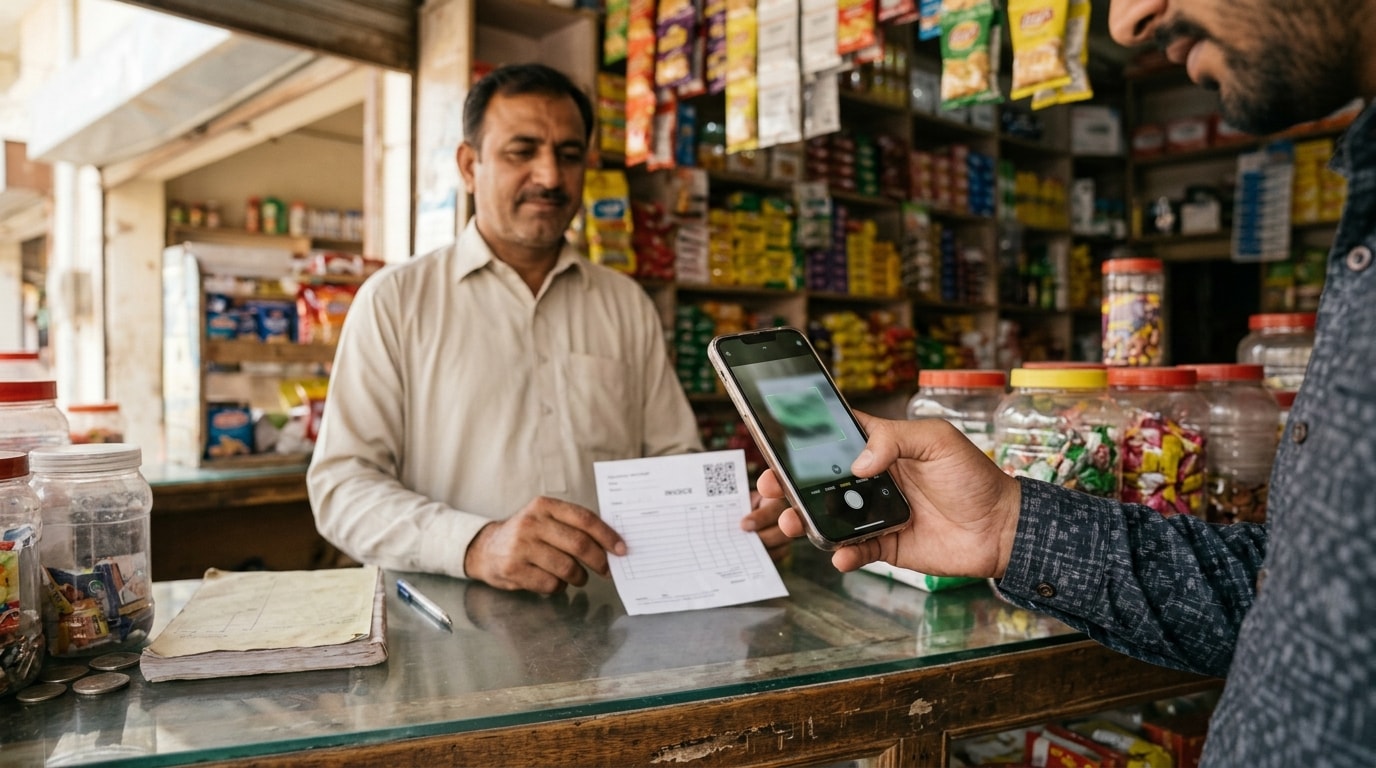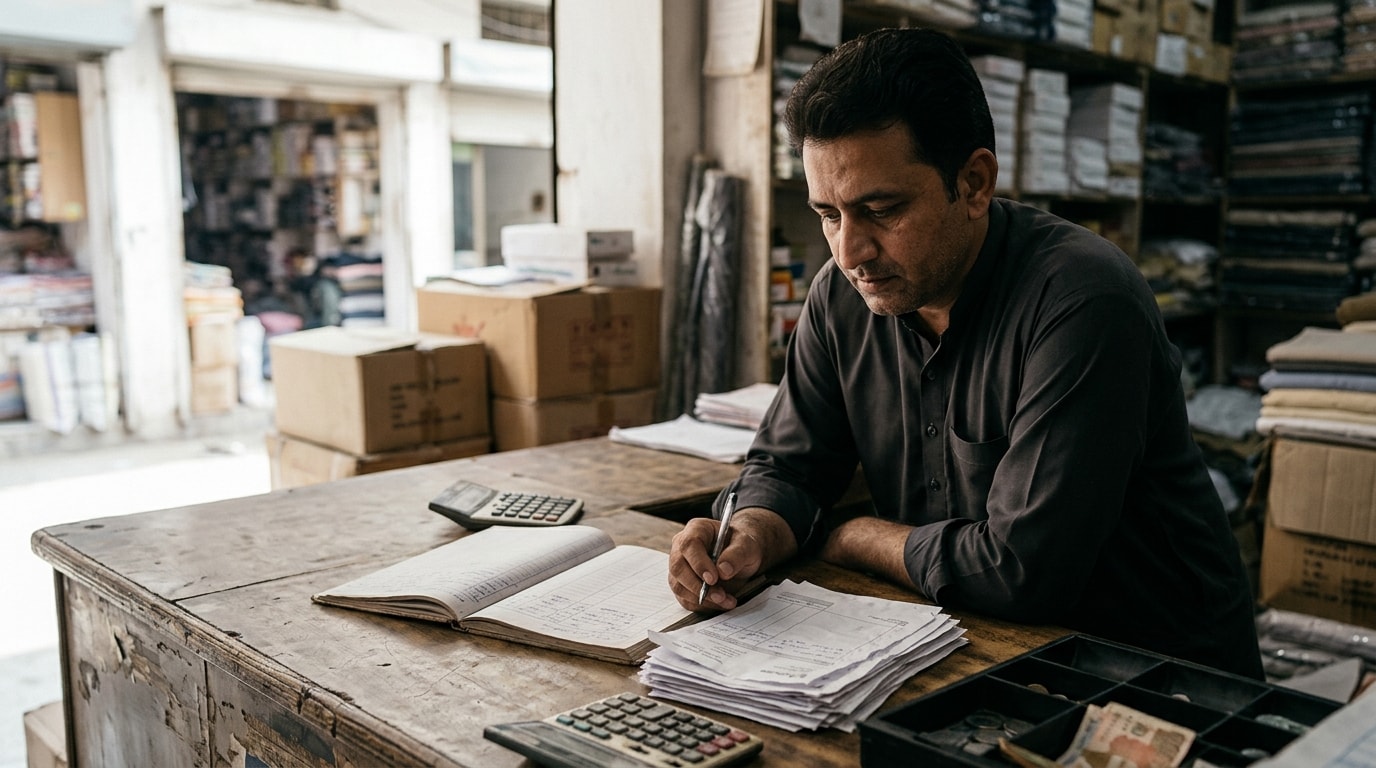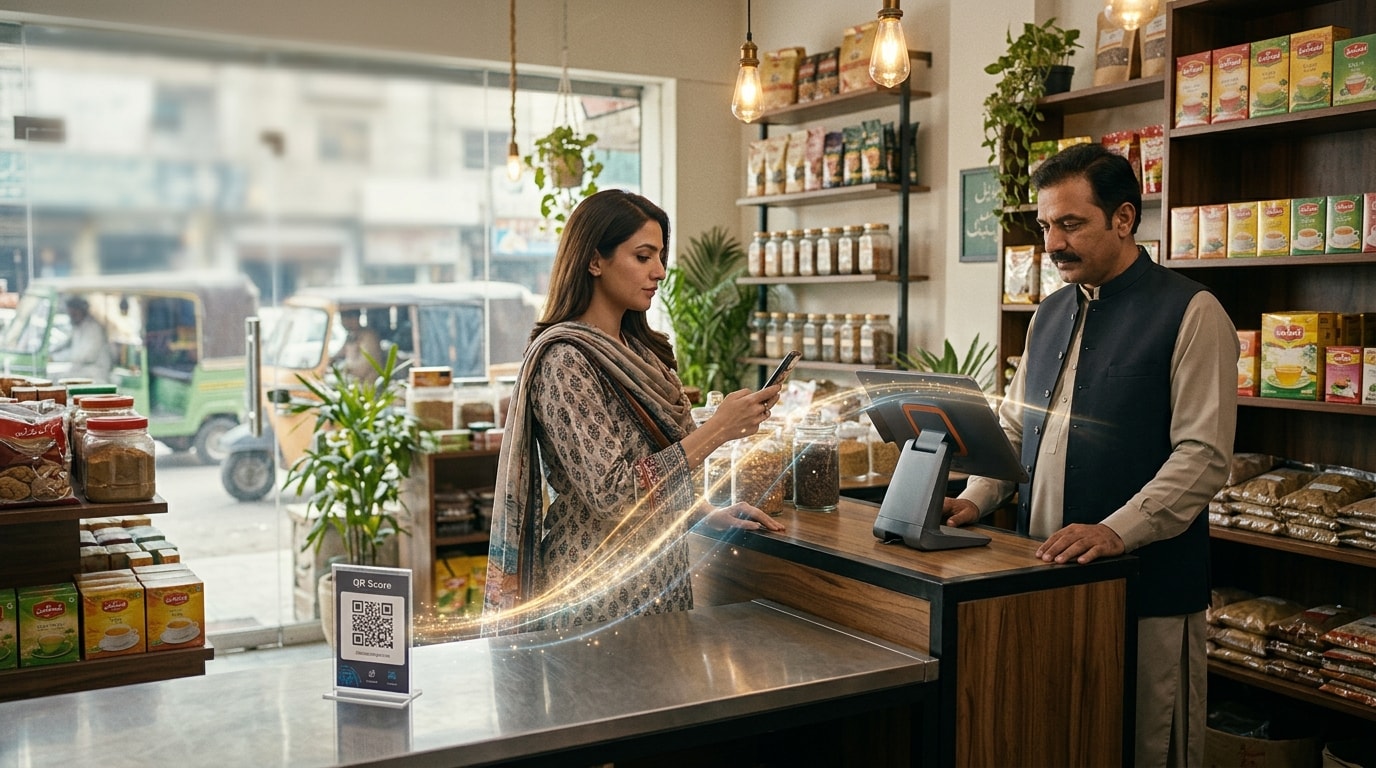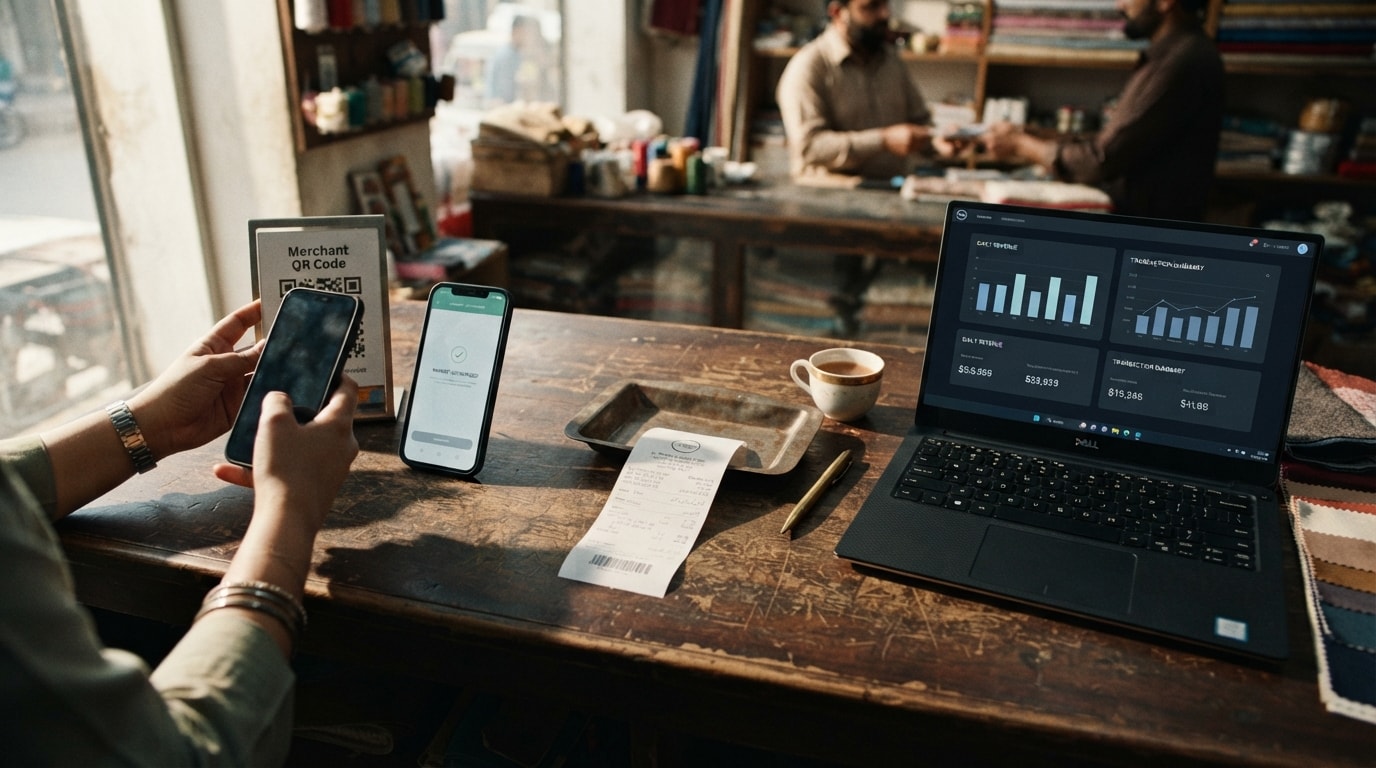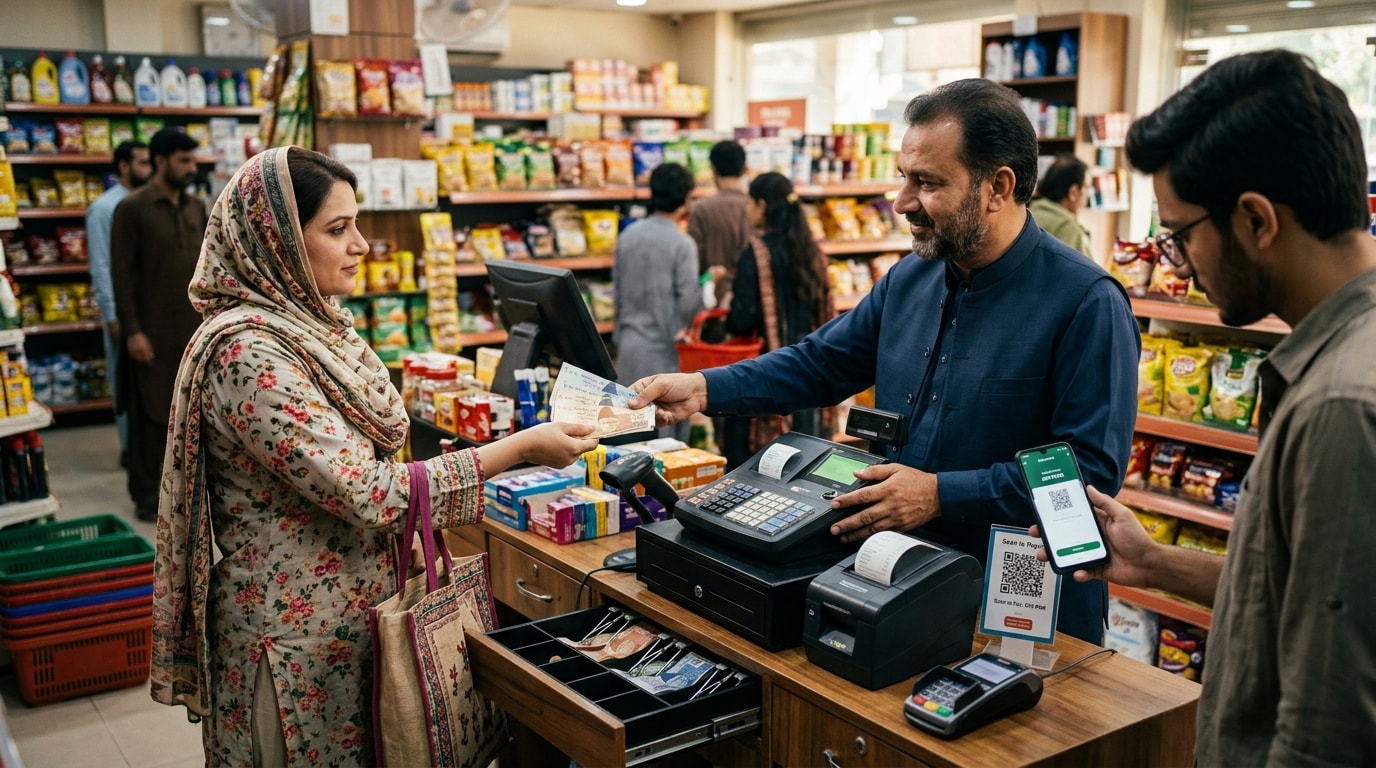
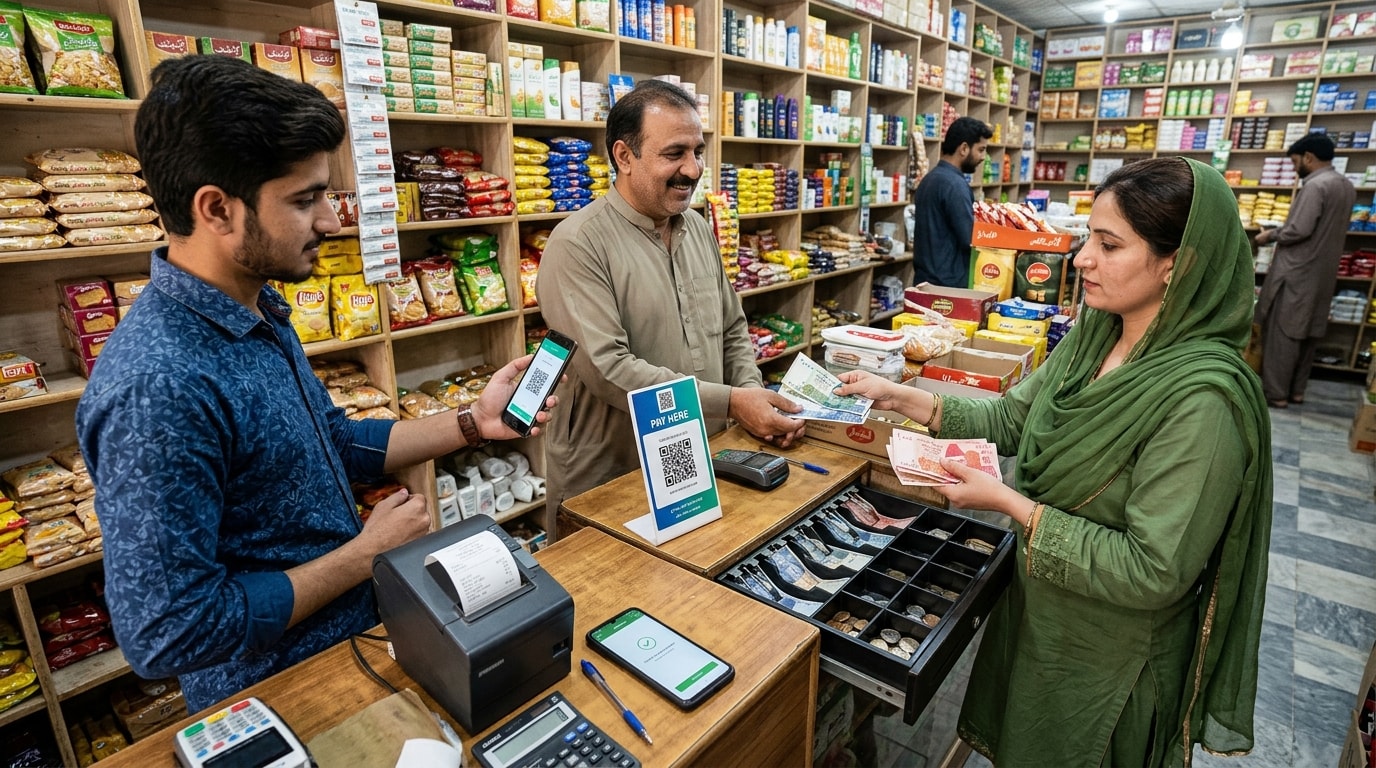
Walk into a busy shop in Karachi or Lahore during peak hours, and you will quickly see the difference between cash and QR payments.
One customer hands over a note. The shopkeeper counts it, checks for change, and puts the money into the cash drawer.
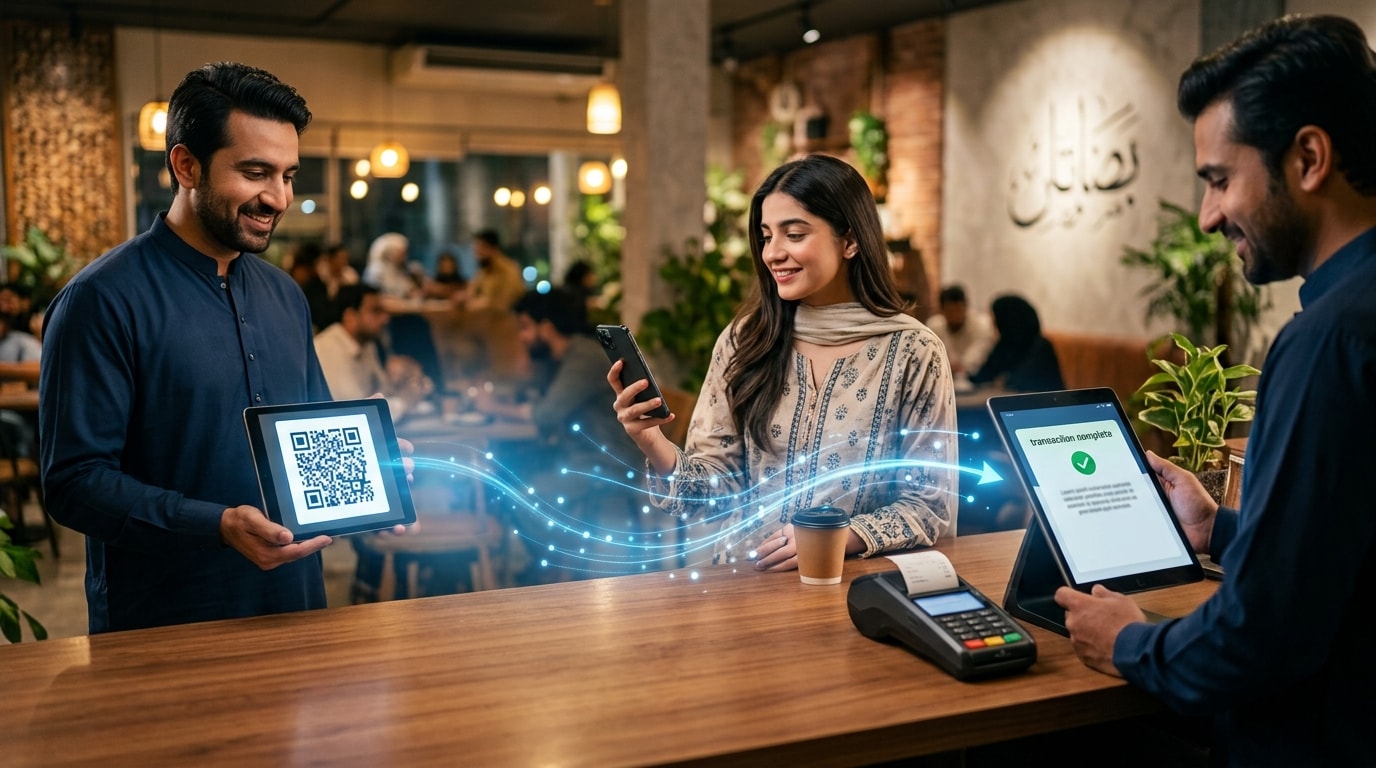
Another customer scans a QR code, confirms the amount on their phone, and completes the payment without exchanging a single note.
Both customers have paid.
But for the business, what happens after the payment can be very different.
The real QR payment vs cash payment question is therefore not simply about how customers pay. It is about speed, convenience, cash handling, transaction records, payment tracking, security, settlement, and financial visibility.
For Pakistani businesses, especially small shops and growing retailers, the answer does not necessarily have to be cash or QR.
In many cases, the smarter approach is to understand where each payment method works and use both in a way that keeps everyday business finances organized.
QR Payments vs Cash Payments at a Glance
The distinction is simple.
Cash is familiar, immediate, and independent of internet connectivity. QR payments can reduce physical cash handling and make digital transaction information easier to track.
The best setup depends on the business, its customers, transaction volume, and operating environment.
What Is the Difference Between QR Payments and Cash Payments?
The basic difference is how money moves from the customer to the business.
With cash, the customer physically gives money to the business. The business checks the amount, provides change when necessary, and records the transaction.
With QR payment, the customer scans the business QR code using a supported banking or payment application, enters or confirms the amount, and authorizes the payment digitally.
Both methods complete the same fundamental job: the customer pays the business.
The difference becomes more important after that payment.
Cash leaves the business with physical money that needs to be counted, stored, recorded, and reconciled.
A digital payment can create an electronic transaction record through the relevant bank, wallet, or payment provider.
That can make it easier to identify and review individual payments later.
In Pakistan, Raast provides national instant payment infrastructure for retail payments, including person-to-merchant payments through methods such as QR codes, merchant aliases, IBANs, and request to pay.
For businesses, QR payments can therefore be more than another way to collect money. They can become part of a broader digital payment and transaction management process.
How QR Payments Work for Businesses
The process is straightforward.
- The business displays a QR code.
- The customer opens a supported banking or payment application and scans it.
- The customer enters or confirms the payment amount.
- The customer authorizes the transaction.
- The payment is transferred electronically through the relevant payment infrastructure.
For customers who already use mobile banking, this can be a convenient way to pay without handling physical notes or waiting for change.
For the business, the transaction does not require physical cash to be counted or stored.
Merchants in Pakistan can accept Raast payments through participating banks and payment service providers. Raast person-to-merchant payments support QR based acceptance, including static and dynamic QR codes.
The exact merchant experience depends on the provider and payment solution being used.
That is why businesses should look beyond the QR code itself and understand how payments will be confirmed, settled, recorded, and managed.
How Cash Payments Work for Businesses
Cash is simple.
A customer pays. The business receives the money. Change is provided if needed.
That simplicity is one reason cash remains important for Pakistani businesses.
A customer does not need a smartphone, banking application, digital wallet, or internet connection.
But the simplicity of accepting cash creates work elsewhere.
Cash needs to be:
- Counted
- Stored
- Recorded
- Reconciled with sales
- Deposited when necessary
The business also needs to ensure that the cash in the drawer matches its records.
For a business handling a small number of transactions, this may be easy enough.
As transaction volume grows, however, counting, reconciliation, deposits, change management, and cash security can consume increasing amounts of time.
QR Payments Can Make Busy Checkout Counters Faster
At a busy counter, small delays add up.
Imagine a shop serving 200 customers during an evening rush.
If cash handling and change add an average of 25 seconds to each transaction, those 200 transactions represent roughly 83 minutes of additional counter time.
QR payments can remove some of those physical steps.
The customer scans, confirms the amount, and authorizes the payment without exchanging notes or waiting for change.
The benefit becomes more noticeable in businesses with high transaction volumes, including grocery stores, pharmacies, bakeries, restaurants, and other busy retail businesses.
That does not mean QR payments are automatically faster in every situation.
A customer with exact cash can complete a small purchase extremely quickly.
The real advantage is that QR payments can remove repetitive cash handling from high volume payment situations.
The Hidden Cost of Cash Payments
Cash can appear free because there is usually no visible transaction fee when a customer hands over a note.
But accepting cash still creates operational costs.
A business may spend time:
- Counting cash
- Finding change
- Depositing cash
- Reconciling the cash drawer
- Investigating counting differences
- Managing cash storage
- Identifying missing money
- Checking potentially counterfeit notes
These costs are not necessarily shown as a single fee.
They appear as staff time, administrative work, operational risk, and manual effort.
QR payments can also involve costs.
Raast was designed as low or zero cost merchant infrastructure, while other digital payment products can have their own charges or merchant discount rates.
So the useful comparison is not simply free versus paid.
Businesses should compare the total cost of accepting and managing each payment method, including provider charges and the operational effort involved.
Always confirm the current pricing and terms with the payment provider before onboarding.
QR Payments and Cash Payments Have Different Security Risks
Cash and QR payments do not create the same security risks.
They simply move the risks into different areas.
Cash creates physical risks such as:
- Theft
- Robbery
- Counterfeit notes
- Loss
- Counting errors
- Missing money
QR payments create digital risks such as:
- Fake payment screenshots
- Social engineering attempts
- Tampered QR codes
- Incorrect payment amounts
- Failed transactions
- Delayed confirmations
- Unauthorized access to payment accounts
One rule is especially important for merchants:
Never treat a customer screenshot as proof that the business has received the payment.
The merchant should verify the transaction through its own payment application, account, notification system, merchant dashboard, or appropriate confirmation device.
A soundbox or similar device can also provide payment confirmation at the counter.
The principle is simple:
A customer showing “paid” is not the same as the business verifying “received.”
Are QR Code Payments Safe for Shopkeepers?
QR payments can be used safely when businesses follow basic security and verification practices.
Merchants should regularly check the QR code displayed at the counter and make sure it belongs to the business and has not been replaced or tampered with.
Payments should be confirmed through the merchant side of the payment system.
Businesses should also avoid relying exclusively on screenshots.
When a transaction is uncertain, the transaction ID or reference can help identify and investigate the payment.
Digital transactions can provide an electronic trail containing information such as payment amount, transaction time, and transaction reference.
Cash does not automatically provide the same type of record.
At the same time, cash has a straightforward physical advantage. When both parties see the money changing hands, there is no digital confirmation screen to interpret.
The takeaway is not that one method eliminates payment risk.
QR payments require digital verification. Cash requires physical and record-keeping controls.
Record Keeping: Manual Records vs Digital History
The payment itself is only one part of a business transaction.
The next question is:
What record exists after the payment?
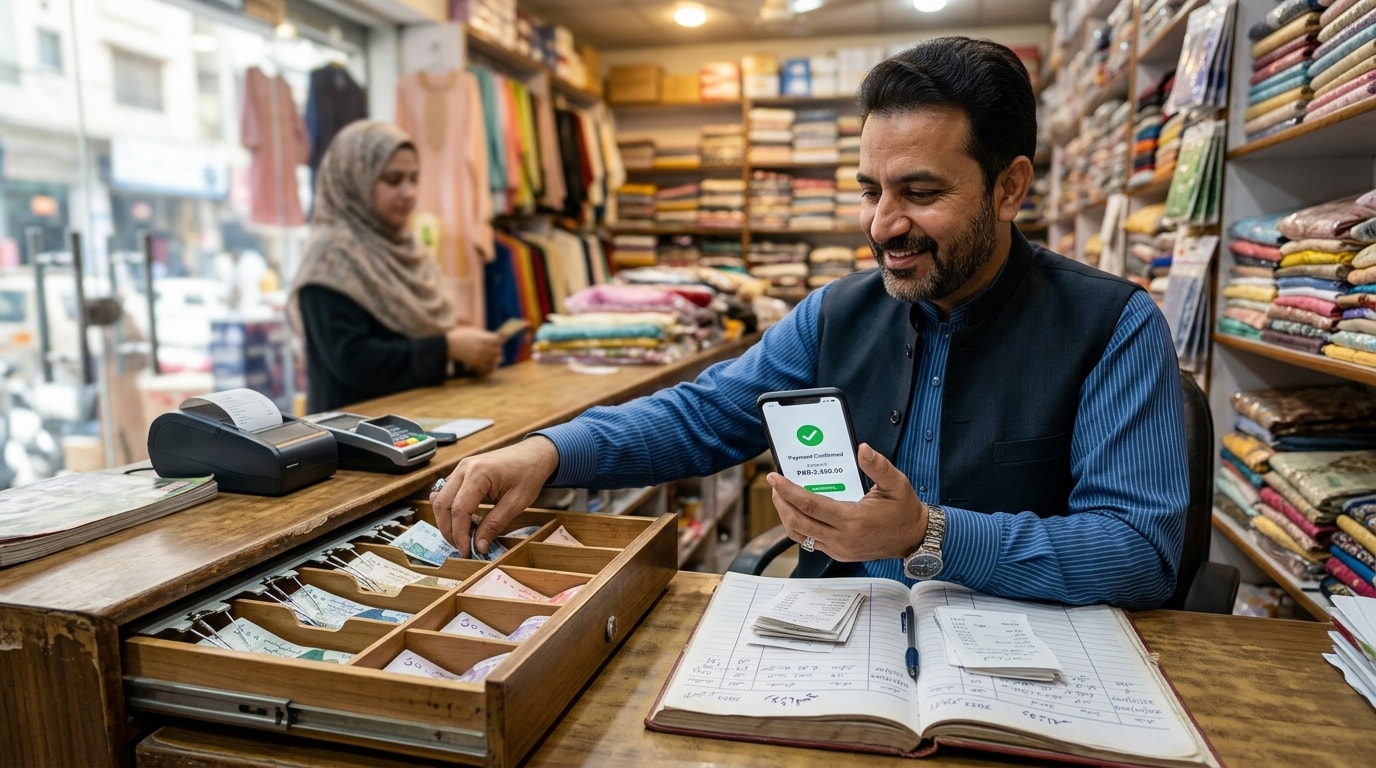
Cash payments generally need to be recorded manually through a bahi khata, cash book, receipt book, spreadsheet, or business management application.
If a transaction is never recorded, the business may eventually have difficulty reconstructing what happened.
Digital payments can provide an electronic transaction history through the relevant bank, wallet, or payment provider.
A transaction may contain information such as the amount, timestamp, and transaction reference.
That can make payment tracking easier.
But digital payment history alone is not complete business management.
Knowing that a customer paid does not automatically tell the business which sale the payment belongs to, whether the customer still has an outstanding balance, what expenses were incurred, or how the payment affects the overall business position.
That is where organized business records become important.
Why Payment Tracking Matters for Businesses
Imagine a shop receives 100 payments in one day.
Some customers pay cash.
Some pay through QR.
Some transfer money directly to a bank account.
Others purchase on credit.
The owner still needs to know:
- How much was received?
- How much came in as cash?
- How much was received digitally?
- Which transactions were recorded?
- Which customers still have balances?
- How much was spent?
- What are the total sales?
- What is the current cash position?
- How much remains after expenses?
This is why payment tracking matters more than the payment method alone.
A business can accept modern payment methods and still have poor financial visibility if records are scattered across notebooks, bank applications, receipts, messages, and memory.
Payment acceptance answers:
“Did the customer pay?”
Payment tracking answers:
“What was paid, when was it paid, how was it paid, and where does it belong in the business records?”
Business management takes that one step further by connecting payments with customers, sales, expenses, balances, and other financial activity.
Digital Payment Records Can Support Better Business Management
A single payment record may not tell an owner much.
A consistent record of payments over weeks and months can reveal much more.
Organized records can help businesses understand:
- Sales patterns
- Payment volumes
- Customer payment history
- Cash movement
- Business expenses
- Customer balances
- Transaction trends
A clear transaction history can also become useful when a business needs to demonstrate financial activity for purposes such as financing or formal financial reporting.
Good records do not automatically guarantee access to financing.
They simply provide documented evidence of business activity when financial institutions or other parties require it.
The bigger benefit is everyday visibility.
When financial activity is organized, an owner can spend less time reconstructing what happened and more time understanding how the business is performing.
Cash vs Digital Payments and Settlement
Cash has one structural advantage:
The business receives it physically at the counter.
There is no digital settlement cycle to wait for.
Digital payments depend on the payment rail and provider.
Raast is designed as a real time payment system, while other card and wallet systems can have their own settlement arrangements.
For businesses with tight cash flow, this matters.
If today's sales are needed to purchase tomorrow's stock, the owner needs to know when the funds will actually become available.
Before choosing a digital payment provider, ask:
- How quickly will funds reach the business account?
- Are funds available immediately?
- Are there settlement cycles?
- Are there fees?
- Are there transaction limits?
- How are refunds handled?
Settlement terms can vary by provider and product, so businesses should confirm the exact arrangement before onboarding.
Customer Payment Preferences Are Changing
The payment options a business offers can affect how easily different customers can complete a purchase.
Smartphones, mobile banking, digital wallets, and QR-based payment systems have made digital payments increasingly familiar to Pakistani consumers.
Raast, JazzCash, Easypaisa, SadaPay, NayaPay, banks, and other payment services have contributed to a broader digital payment environment.
But cash remains important.
Some customers carry cash and prefer it.
Some customers do not use mobile banking or digital wallets.
Others may want to pay digitally because they carry little or no cash.
That makes payment flexibility valuable.
A business does not necessarily need to force every customer into the same payment method.
Make it easy for customers to pay the way that works for them.
Where Cash Payments Still Make Sense
Cash continues to have practical advantages.
Cash works without internet
If connectivity is unavailable, a cash payment can still be completed.
Pakistan also experiences connectivity problems and power interruptions, while some locations may have weaker mobile data coverage.
That makes cash an important backup for businesses that accept digital payments.
Cash works for customers outside digital payment systems
Not every customer has a smartphone.
Not every customer uses mobile banking.
Not every customer has a digital wallet.
And some customers simply prefer cash.
Keeping cash available allows a business to continue serving these customers.
Small purchases may not need digital payment
For extremely small transactions, especially when the customer has the exact amount, cash can be extremely quick.
The efficiency benefits of QR payments can become more noticeable as transaction volumes and cash handling requirements increase.
The point is not to eliminate cash.
It is to use it where it makes practical sense.
Why Hybrid Payment Acceptance Makes Sense
Businesses do not necessarily have to choose between cash and QR payments.
Accepting both can give customers flexibility while giving the business a reliable backup.
A hybrid payment setup can allow a business to:
- Accept cash from customers who prefer physical payments
- Accept QR payments from customers who prefer digital transactions
- Keep cash available during connectivity problems
- Record both payment types
- Track customer balances
- Reconcile cash and digital transactions
The important part is consistency.
The customer may use cash or QR.
The business should still be able to understand the transaction afterward.
Different payment methods should not mean disconnected business records.
QR Payments for Small Businesses
For small business owners, time is one of the most valuable resources.
The owner may be handling customers, suppliers, purchasing, expenses, inventory, employees, sales, and finances at the same time.
QR payments can reduce physical cash handling for digital transactions.
But accepting QR payments is only one part of the solution.
The business still needs to track payments, record transactions, manage customer balances, monitor expenses, and understand its overall financial position.
That is why QR payments become more valuable when they fit into a broader business management process.
The goal is not simply to make collecting money easier.
It is to make the business easier to manage from the moment the customer pays to the moment the owner reviews the day's finances.
QR Payments in Pakistan
QR payments are becoming increasingly relevant to Pakistani businesses as digital payment infrastructure expands.
The State Bank of Pakistan has developed Raast as the country's national instant payment system, including support for person-to-merchant payments.
SBP payment systems reviews have also reported growth in QR-enabled merchants and digital payment activity.
For retailers, restaurants, pharmacies, service providers, and other merchants, the question is increasingly about how to incorporate digital payments into everyday operations.
Accepting a QR payment is one part of that process.
The bigger challenge is keeping payment activity connected to the rest of the business.
How to Get a QR Code for a Shop
Businesses generally obtain merchant QR payment facilities through participating banks or payment service providers.
The onboarding process can involve:
- Identity verification
- Business information
- A bank account or wallet for receiving payments
- KYC requirements
- Provider-specific documentation
Raast merchant QR facilities are available through participating banks and payment service providers.
Requirements, eligibility, pricing, settlement arrangements, and documentation can vary by provider.
Before signing up, businesses should confirm:
- How payments will be received
- How quickly funds will become available
- What charges apply
- What transaction limits exist
- How refunds are handled
- What transaction information is available
A QR code is only one part of the merchant payment setup.
Static QR vs Dynamic QR
Businesses generally encounter two common QR formats: static QR and dynamic QR.
Static QR
A static QR code remains displayed at the counter.
The customer scans the same code and enters the payment amount.
This can work well for small businesses because the setup is simple and the same code can be used repeatedly.
The main consideration is that the customer manually enters the amount.
Dynamic QR
A dynamic QR code can be generated for an individual transaction and may contain the payment amount already.
This can reduce manual amount entry and help reduce typing mistakes.
Dynamic QR can be particularly useful for businesses handling higher transaction volumes or requiring more transaction-specific payment flows.
A small business may start with a static QR and consider a dynamic QR solution as transaction volume grows.
QR Payment Charges for Merchants
The cost of accepting QR payments depends on the payment rail, bank, wallet, acquirer, provider, and product.
Raast was designed as low or zero-cost merchant infrastructure, while other payment providers can apply merchant discount rates or other charges.
Before onboarding, merchants should confirm:
- Merchant discount rate
- Transaction charges
- Settlement charges
- Account requirements
- Settlement timing
- Refund procedures
- Transaction limits
Businesses should also consider the operational cost of cash handling.
The goal is not to assume that QR is always cheaper than cash.
The goal is to understand the total cost of accepting and managing each payment method.
QR Payments and the Tax Question
Tax concerns can influence how businesses think about digital payments.
A common misconception is that accepting QR payments automatically creates a new tax simply because the transaction is digital.
The payment method itself does not create a separate tax merely because the transaction happens digitally.
Applicable tax obligations can depend on factors such as:
- Business turnover
- Registration status
- Business category
- Applicable tax rules
Digital payments can make transactions easier to document because they create an electronic record.
That does not mean the payment method itself determines the tax liability.
Cash should not automatically be treated as tax-free either. Applicable tax rules can affect businesses and certain cash transactions as well.
Tax rules can change and can depend on individual business circumstances, so businesses should confirm their specific obligations with the relevant authorities or a qualified tax professional.
Failed QR Payments and Payment Disputes
Digital payments can create a problem that cash generally does not.
A customer may see a successful payment message while the merchant has not yet received confirmation.
At a busy counter, that can create confusion.
The solution is to establish a simple verification process.
Confirm the payment from the merchant side
Check the merchant application, receiving account, notification system, dashboard, or confirmation device.
Do not rely solely on a customer screenshot.
Record the transaction ID
If a transaction is uncertain, the transaction reference can help identify and investigate the payment.
Understand refunds and reversals
Businesses should understand how refunds, reversals, and disputed transactions are handled before accepting digital payments.
Cash does not create the same digital confirmation problem.
But cash has different risks, including counterfeit notes, theft, counting errors, and missing money.
Every payment method needs appropriate controls.
QR Payment vs Cash Payment: Which Is More Convenient?
Convenience depends on the situation.
For a customer already using mobile banking, QR payment can be extremely convenient.
For a customer carrying exact cash, cash can be just as convenient.
For the business, QR payments can reduce physical cash handling and provide digital transaction information.
Cash can continue working when digital connectivity is unavailable.
That is why convenience should be considered from both sides of the counter.
The most practical setup is often the one that gives customers a choice while keeping business records organized.
QR Payment vs Cash Payment for Business: The Practical Answer
There is no universal payment method that works best for every business.
QR payments can provide:
- Digital payment convenience
- Less physical cash handling
- Digital transaction records
- Easier payment tracking
- A convenient option for mobile banking users
Cash can provide:
- Immediate physical settlement
- No internet requirement
- Familiarity
- Accessibility for customers outside digital payment systems
- A reliable backup during connectivity problems
For many Pakistani businesses, hybrid payment acceptance makes practical sense.
Keep cash available.
Add QR payments for customers who prefer digital transactions.
Then make sure both payment types are properly recorded and managed.
Because accepting money is only the beginning.
Why Payment Management Matters More Than Choosing One Payment Method
A business can have modern payment methods and still have messy finances.
It can accept QR payments but fail to track them properly.
It can collect cash but forget to record transactions.
It can have customer balances scattered across notebooks.
It can record expenses somewhere else.
The payment method answers:
“How does the money reach the business?”
Business management answers:
“What happens after the money arrives?”
That includes payment tracking, transaction history, customer balances, cash management, expenses, invoicing, inventory, receivables, payables, and financial reporting.
When these records are organized, the business owner gets a clearer view of what is happening instead of trying to reconstruct the day from scattered information.
How Rupin Helps Manage Cash and Digital Payments
This is where Rupin fits into the bigger picture.
Rupin is built around the broader business management problem that exists after a payment is made.
A business may receive money through cash, QR payments, customer credit, or other payment methods.
The challenge is keeping those transactions organized alongside everything else happening in the business.
Rupin brings tools such as:
- Digital khata
- Digital ledger management
- Cash Book
- Payment tracking
- Transaction history
- Expense management
- Invoicing
- Inventory management
- Customer balances
- Receivables
- Payables
- Business reporting
into one platform.
That means payments do not have to remain isolated transactions.
Cash payments can be recorded.
Digital payments can be tracked.
Customer balances can be managed.
Expenses can be recorded.
Transaction history can be reviewed.
The goal is not to make a business choose between cash and QR.
The goal is to help the business manage its financial activity more clearly, regardless of how customers pay.
For a shop owner, that can mean fewer scattered records, less manual reconciliation, and a clearer view of daily business activity.
Ready to Make Business Payments Easier to Manage?
QR payments and cash payments do not have to compete.
Keep cash available for customers who prefer it.
Add QR payments for customers who want a digital option.
Then bring the resulting transactions into an organized business management workflow.
Rupin brings digital khata, payment tracking, Cash Book, expenses, invoices, inventory, customer records, and other business management tools together in one app.
Instead of ending every day with scattered records and questions about where the money went, you can build a clearer financial record as business activity happens.
Less scattered record-keeping. Less manual reconciliation. More visibility into your business.
Download Rupin and bring payment tracking, cash management, and everyday business finances into one place.
Keep the counter simple. Let your records do more.
Frequently Asked Questions
1. What is the difference between QR payments and cash payments?
QR payments are digital transactions completed by scanning a QR code and authorizing payment through a supported banking or payment service. Cash payments involve physically transferring money to the business. QR payments can provide digital transaction records, while cash payments generally require manual recording.
2. Is QR payment better than cash for businesses?
It depends on the business, its customers, transaction volume, connectivity, and operational requirements. QR payments can reduce physical cash handling and provide digital transaction records. Cash works without internet access and remains familiar to customers. Many businesses can use both.
3. What are the advantages of QR payments for businesses?
QR payments can provide a convenient digital payment option, reduce physical cash handling, simplify payments for mobile banking users, and provide digital transaction information that can support payment tracking and reconciliation.
4. What are the disadvantages of QR payments?
QR payments depend on digital access and connectivity. Businesses may also encounter payment delays, incorrect amounts, failed transactions, fraudulent payment claims, or account security risks. Merchants should verify payments through their own payment system.
5. What are the advantages of cash payments?
Cash is familiar, does not require internet access, and provides immediate physical settlement. It can also serve as a backup when digital payment systems or connectivity are unavailable.
6. What are the disadvantages of cash payments for businesses?
Cash requires counting, storage, reconciliation, and physical handling. Businesses may also need to manage change shortages, counterfeit notes, theft risks, counting errors, and manual transaction records.
7. Are QR code payments safe for shopkeepers?
QR payments can be used safely when merchants verify payments through their own merchant system, protect their payment accounts, and regularly check that displayed QR codes have not been tampered with. Businesses should never rely solely on customer screenshots.
8. Can a shop accept both QR and cash payments?
Yes. Businesses can accept both methods so customers can choose how they want to pay. Keeping cash available can also provide a backup when digital payment access or connectivity is unavailable.
9. How can businesses track QR payments?
Businesses can review transaction histories through their bank, wallet, or payment provider. A business management system can also connect payment activity with customer records, expenses, cash flow, and other financial information.
10. How can small businesses track cash payments?
Small businesses can record cash transactions through a cash book, digital ledger, accounting system, or business management application. Regular recording and reconciliation can help keep physical cash aligned with business records.
11. What is Raast QR in Pakistan?
Raast is Pakistan's national instant payment system. Its person-to-merchant service supports digital payment acceptance through methods including QR codes, merchant aliases, IBANs, and request to pay.
12. How does a shop get a QR code in Pakistan?
A business can obtain a merchant QR facility through a participating bank or payment service provider. Requirements can include identity verification, business information, a receiving bank account or wallet, and KYC documentation. Requirements vary by provider.
13. What is the difference between static QR and dynamic QR?
A static QR code generally remains the same and allows customers to enter the payment amount after scanning. A dynamic QR code can be generated for an individual transaction and may contain the payment amount already. Static QR can suit smaller businesses, while dynamic QR can be useful for higher transaction volumes.
14. Do merchants pay charges on QR payments in Pakistan?
Charges depend on the payment rail, bank, wallet, acquirer, provider, and product. Raast was designed as low or zero-cost merchant infrastructure, while other providers can apply merchant discount rates or other charges. Merchants should confirm current pricing directly with their provider
15. How long does a QR payment take to reach a business account?
Settlement depends on the payment rail and provider. Raast is designed as a real-time payment system, while other digital payment systems can have different settlement arrangements. Businesses should confirm exact settlement timing with their provider.
16. Does accepting QR payments create a new tax?
The payment method itself does not create a separate tax simply because a transaction is digital. Applicable tax obligations depend on factors such as turnover, registration status, business category, and applicable rules. Businesses should confirm their specific tax requirements based on their circumstances.
17. Do merchants need an NTN to accept QR payments?
Requirements can vary by provider and business circumstances. Merchant onboarding can require identity documents, business information, a receiving account, and KYC documentation. Businesses should confirm exact requirements with their chosen bank or payment provider.
18. How can businesses manage both cash and QR payments?
Businesses can accept both payment methods while keeping cash and digital transactions identifiable in their records. Regular reconciliation, payment tracking, transaction history, customer balances, and organized cash management can help maintain a clearer view of business finances.
19. How does Rupin help with business payment management?
Rupin provides tools for digital khata, payment tracking, transaction history, Cash Book, expenses, invoicing, inventory, customer balances, receivables, payables, and broader business management. These tools can help businesses organize financial activity across different payment methods.
20. Is QR payment useful for small businesses in Pakistan?
QR payments can give small businesses a digital payment option for customers who prefer mobile banking or supported digital payment services. It can also reduce physical cash handling and provide digital transaction information that supports payment tracking and record-keeping. For businesses serving customers with different payment preferences, combining QR payments with cash can provide greater flexibility.