
How to Collect Payments Online From Customers
September 16, 2026
.Blog

Getting a customer to buy is only half of a successful transaction. The other half is making sure they can pay easily.
You can have the right product, the right price, and a customer ready to buy. But if paying requires too many steps, unclear instructions, or unnecessary back and forth, that final moment can create friction and even delay the sale.
That is why more businesses are looking for practical ways to collect payments online.
Whether you are a freelancer collecting payment from a client, a retailer taking orders through social media, a service provider requesting an advance, or a growing business serving customers across different locations, digital payment collection can make getting paid faster and easier.
This guide explains how businesses can collect payments online, the different payment methods available, how payment links work, how to accept payments without a website, how to simplify payment collection, what online payment fees can include, and how to keep customer payments organized.
It also explains how Rupin fits into a more connected approach to managing business payments.
Why Businesses Need to Accept Payments Online
Customers increasingly expect convenience when they pay.
Cash still works, but it requires the customer and business to be in the same place at the same time. Online payment collection removes much of that limitation.
A customer can pay from home. A client can pay while working remotely. An online seller can receive an order from another city. A service provider can request an advance before an appointment.
In simple terms, online payments turn your physical payment counter into a digital one that can travel with your business.
1. Customers get more convenience
Customers do not always want to visit a physical location just to make a payment.
Giving them a convenient online payment option makes the final step of buying easier and can reduce delays.
2. Businesses can collect payments remotely
You can receive payments even when you and your customer are not physically together.
This is particularly useful for freelancers, consultants, agencies, tutors, online sellers, and service providers.
3. Businesses can serve customers beyond their immediate location
A cash-only business is naturally limited by physical proximity.
Online payment collection gives businesses more flexibility to sell to customers across cities and, where supported, across borders.
4. Payment records become easier to maintain
Digital transactions can create electronic records that make it easier to review payment history, confirm transactions, and understand business cash flow.
This becomes increasingly valuable as transaction volume grows.
A handful of payments may be easy to manage manually. Dozens or hundreds of payments can quickly turn scattered messages, screenshots, and account checks into an operational headache.
What Does It Mean to Collect Payments Online?
Collecting payments online simply means giving customers a way to pay your business digitally instead of relying entirely on physical cash.
Depending on your business and available payment infrastructure, this can include:
• Payment links
• Bank transfers
• QR payments
• Digital wallets
• Mobile payments
• Card payments
• Hosted checkout pages
• Recurring payments
The process is straightforward.
A customer places an order or requests a service. You provide a suitable payment option. The customer completes the transaction digitally. You receive confirmation and record the payment.
Think of it as a traditional cash counter going digital.
The difference is that your customer does not necessarily need to stand in front of it.

How Online Payment Collection Works
The exact process depends on the payment method and provider, but the basic journey is simple.
A customer initiates a payment. The relevant payment infrastructure securely handles the payment information. The transaction is authorised through the applicable financial network, and the funds are made available to the business according to the provider’s settlement process.
For card payments, businesses may encounter terms such as payment gateway, payment processor, and merchant account.
A payment gateway generally refers to technology that securely transmits payment information between the customer and the payment processing network.
A payment processor handles transaction communication between the relevant financial institutions.
A merchant account is an account used to receive funds from card transactions before settlement to the business’s designated account.
Modern financial platforms can combine or simplify several of these components.
For most small businesses, you do not need to understand every technical layer. The more important question is whether your chosen solution makes collecting, confirming, and managing customer payments straightforward.
What Are the Different Ways to Collect Payments Online?
There is no single payment method that works for every business.
The right choice depends on how customers buy, where transactions happen, transaction value, customer preferences, and how you want to manage payments.
The goal is not to offer every possible payment method.
The goal is to make paying easy for your customers and manageable for your business.
1. Payment Links
Payment links are one of the simplest ways to collect payments remotely.
A payment link gives the customer a direct route to a payment experience and can be shared through messaging apps, email, social media, or other communication channels.
This is particularly useful for businesses without a traditional ecommerce checkout.
For example, a customer can message a social seller about a product, confirm the order, and receive a payment link instead of manually exchanging payment information.
Payment links can be particularly useful for:
- Freelancers
• Consultants
• Service providers
• Small businesses
• Social commerce sellers
• Businesses taking remote orders
• Businesses collecting advance payments
2. Bank Transfers
Bank transfers allow customers to send money directly from their bank account.
They can be useful for larger transactions, business payments, and customers who already prefer mobile or internet banking.
The important consideration is what happens after the transfer.
If your business regularly receives bank transfers, you need a practical way to identify incoming payments, confirm them, and associate them with the correct customer or transaction.
3. QR Payments
QR payments allow customers to scan a QR code through a compatible banking or payment application and complete the transaction digitally.
They can be especially useful for physical businesses that want to offer a cashless payment option.
Instead of asking customers to handle cash or manually enter account details, you can present a QR code at the point of sale.
For the customer, the process can be as simple as scanning, checking the amount, and confirming the payment.
4. Digital Wallets
Digital wallets allow customers to make payments using funds or payment methods available through a supported wallet service.
They can be useful for everyday digital transactions and can form part of a broader payment strategy.
For businesses, however, the wallet is only one part of the equation. You still need a convenient way to request payments, confirm transactions, and maintain records.
5. Mobile Payments
Mobile banking and mobile payment channels allow customers to initiate payments directly from their phones.
They do not need to visit a bank branch or physically hand money to the business.
For businesses, this can shorten the distance between a customer deciding to pay and the payment actually being completed.
6. Card Payments
Credit and debit cards remain an important online payment method, particularly for ecommerce businesses and businesses serving customers who prefer card based transactions.
The available card payment options depend on the provider, market, and business requirements.
The important thing is not to offer payment methods simply to have more options.
Offer the methods your customers actually use.
How to Accept Payments Online Without a Website
You do not necessarily need a full website to start accepting payments online.
This can be particularly useful for small businesses, freelancers, consultants, service providers, and social commerce sellers.
Payment links, QR codes, and hosted payment experiences can allow businesses to collect digital payments without building a complete ecommerce website.
A freelancer can agree on work and pricing through email or messaging and share a payment link.
A home based seller can receive an order through social media and provide a payment option directly in the conversation.
A service provider can request an advance before an appointment.
The website becomes optional rather than a prerequisite.
You can start making payment easy without waiting for your entire online presence to be built.
How to Collect Payments From Customers Online
The technology is only one part of payment collection. You also need a workflow that works for your customers and your business.
1. Understand How Customers Buy
Look at the journey your customers already take.
Do they visit a physical store? Order through social media? Contact you through WhatsApp? Buy through an ecommerce website? Request services remotely?
Your payment method should fit that journey.
There is little value in creating a sophisticated checkout process if your customers already place orders through messages.
2. Choose Relevant Payment Options
Once you understand the customer journey, choose payment methods that fit it.
A physical retailer may prioritise QR payments.
A freelancer may benefit from payment links.
An ecommerce business may need a dedicated checkout with multiple relevant options.
A service business may need payment requests and advance collection.
The objective is not to offer everything. It is to remove unnecessary friction.
3. Make the Payment Request Clear
A payment request should clearly communicate:
- What the customer is paying for
• How much they need to pay
• How they can pay
• What happens after payment
Your customer should not have to ask, “How much should I send?” or “Where should I pay?”
Make the next step obvious.
4. Give Customers an Easy Payment Route
Every additional step can create friction.
If customers have to copy long account details, switch between applications, search old messages, or manually send proof of payment, the payment journey becomes harder than necessary.
A good payment experience should feel like a clear path rather than a maze.
5. Confirm the Payment
Once payment has been made, your business needs a reliable way to confirm the transaction.
This becomes especially important when several customers are paying at the same time.
6. Keep Transactions Organized
Payment collection should not end when the money arrives.
You should also be able to understand your payment history, transaction records, and outstanding customer payments.
The goal is to create a complete payment workflow rather than simply finding a way for money to enter the business.
How to Collect Payments Online in Pakistan
Businesses in Pakistan have access to an expanding digital payment ecosystem that includes bank based payments, mobile banking, cards, wallets, QR payments, and instant payment infrastructure.
The State Bank of Pakistan has identified digital channels such as mobile banking, internet banking, payment cards, QR payments, and branchless banking as important parts of the country’s payment system.
As customers become more comfortable using digital channels, businesses have more opportunities to give them convenient ways to pay.
For Pakistani businesses, the practical question is not simply whether digital payments matter.
It is:
Which payment collection setup fits my customers and the way I run my business?
How Small Businesses Can Collect Payments Online
Small businesses often need simplicity more than complexity.
You may already be managing customers, sales, suppliers, inventory, staff, and finances. Payment collection should not become another complicated system to manage.
A practical setup might include:
- A payment link for remote customers
• QR payments at a physical location
• Bank transfer options
• Clear payment requests
• Payment confirmation
• Organized transaction records
The right combination depends on your business.
A freelancer may need a payment link.
A retailer may benefit from QR payments.
A service provider may prioritise advance payments.
An ecommerce business may need a fast checkout with relevant payment options.
Build the payment setup around how your customers actually pay.
Payment Collection for Freelancers and Service Providers
Freelancers and service providers often have no physical checkout at all.
A customer could be in another city, elsewhere in Pakistan, or even another country.
You need a professional way to request payment without turning every transaction into a long conversation.
A strong setup can combine:
- A clear invoice or payment request
• A direct payment option
• Relevant payment methods
• Payment confirmation
• Payment records
• Automated reminders where supported
Payment links can be particularly useful because they can be shared directly with customers.
Instead of repeatedly explaining how to make a transfer, you can provide a direct payment route.
The result is a shorter journey from completed work to payment received.
B2B Payment Collection
B2B payment collection can involve larger amounts, longer payment cycles, purchase orders, approvals, and multiple people on the customer’s side.
That makes clarity especially important.
Businesses can improve the process by providing clear payment requests, offering appropriate payment options, maintaining accurate records, and following up on outstanding payments.
For regular billing arrangements, recurring payment capabilities may reduce repetitive manual work where supported.
The objective is to make payment collection systematic rather than relying on someone to remember to send a reminder every time.
Ecommerce Payment Collection
For ecommerce businesses, payment is where browsing becomes revenue.
A customer may spend several minutes exploring products, comparing prices, adding items to a cart, and deciding to buy.
If checkout is slow or confusing, all that buying intent can disappear at the final step.
A good ecommerce payment experience should be:
- Fast
• Mobile friendly
• Clear
• Secure
• Easy to navigate
• Supported by relevant payment options
Do not make paying harder than buying.
The checkout should feel like the final step of the customer journey, not another obstacle.
How to Make Online Payment Collection Easier
You do not need a complicated payment system to create a good customer experience.
Focus on six fundamentals.
1. Make the payment request specific
Tell the customer exactly what the payment is for and how much is required.
2. Reduce unnecessary steps
Disconnected processes create more opportunities for payments to be delayed.
3. Offer relevant choices
Different customers have different preferences. Provide the payment options that make sense for your audience.
4. Make payment confirmation clear
Both the business and customer should know that the transaction has been completed.
5. Keep payment records organized
You should be able to understand where a payment came from and what it relates to.
6. Follow up on unpaid payments
For businesses that invoice customers or operate on agreed payment schedules, timely reminders can reduce delays and unnecessary payment conversations.
How Businesses Can Track Customer Payments
Getting paid and knowing what happened to that payment are two different things.
A business can receive money successfully and still struggle to answer:
Which customer paid?
When did they pay?
Which order or service was the payment for?
Which payments are still outstanding?
How much has the business received?
Manual tracking may work at low transaction volumes.
As your business grows, organized transaction history becomes increasingly important for reviewing payment status, maintaining records, reconciling transactions, and understanding financial activity.
That is why a payment solution should not be judged only by whether it can receive money.
Ask the bigger question:
Can it help me stay in control after the money arrives?
Are Online Payments Safe?
Security should be a fundamental consideration whenever your business collects payments online.
Choose reputable payment providers and understand how payment data and transactions are protected.
For card payments, businesses may encounter standards such as PCI DSS, which establish requirements around protecting cardholder data.
Secure payment pages should also use HTTPS to protect information transmitted between the customer’s device and the payment service.
Businesses should also consider fraud protection and dispute management.
A chargeback can occur when a customer disputes a card transaction with their bank. Clear payment information, transparent refund policies, accurate records, and good customer communication can help reduce unnecessary disputes.
Security is not just a technical issue. It is part of building customer trust.
What Do Online Payment Fees Usually Include?
Online payment collection is rarely completely free.
Depending on the provider and payment method, businesses may encounter:
• Transaction fees
• Fixed fees
• Monthly fees
• Settlement fees
• Currency conversion costs
• Other charges
Pricing can vary by provider, country, payment method, transaction type, and business volume.
That is why you should look beyond an advertised transaction percentage and understand the total cost.
A solution with no monthly subscription may have higher transaction charges. Another provider may charge a recurring fee while offering a different transaction structure.
The right choice depends on your transaction volume and business requirements.
Understand the complete cost before building your payment process around a provider.
Can Businesses Collect Payments Online for Free?
Some payment services allow businesses to start without a monthly subscription and charge fees when transactions are processed.
However, completely free payment collection is uncommon.
There may still be transaction related charges or other service costs.
For a new or low volume business, avoiding a monthly subscription may be attractive.
As transaction volume grows, reassess your total payment costs and compare the value you receive.
The real question is not:
“Free or paid?”
It is:
“What am I paying in total, and what am I getting in return?”
How Recurring Payments Can Help Businesses
Some businesses collect payments regularly rather than just once.
Freelancers may work on monthly retainers. Service providers may have recurring customers. Subscription businesses may charge customers on a regular schedule.
Where supported, recurring payment functionality can reduce repetitive work.
The customer authorises payments according to an agreed schedule, allowing future payments to be collected according to the arrangement.
This can improve predictability and reduce the need to manually request the same payment every month.
Recurring payments are not necessary for every business. They are most relevant to businesses with repeat billing arrangements.
What Is the Best Way to Collect Payments From Clients Online?
There is no universal answer.
The best option depends on your business model and customer journey.
A freelancer may find payment links useful.
A physical retailer may benefit from QR payments.
An ecommerce business may need a fast checkout with multiple relevant payment options.
A service provider may need advance payments or recurring billing.
A B2B business may rely more heavily on bank transfers and structured payment requests.
The common principle is simple:
Make it easy for the customer to pay and easy for your business to manage what happens afterward.
That means reducing unnecessary steps, offering relevant payment options, confirming transactions, maintaining records, and following up on outstanding payments.
Common Mistakes When Collecting Payments Online
1. Making customers search for payment information
Customers should not have to dig through old messages to find account details or payment instructions.
2. Providing too many disconnected options
More payment methods are not automatically better if every option creates another system for your business to manage.
3. Forgetting payment confirmation
A customer may believe they have paid while your business has no clear way to verify the transaction.
4. Relying entirely on manual tracking
Manual records can work at low transaction volumes but become difficult to maintain as your business grows.
5. Ignoring the payment experience
Businesses often invest heavily in products and sales while treating payment as an afterthought.
That is a mistake.
The payment stage is where buying intent becomes revenue.
How Rupin Aligns With Online Payment Collection
Collecting a payment is only one part of managing business money.
The bigger challenge is knowing what happened afterward.
Can you see your transactions clearly? Can you keep payment activity organized? Can you reconcile what came in? Can you manage your financial activity without constantly moving between disconnected tools?
That is where Rupin fits into the picture.
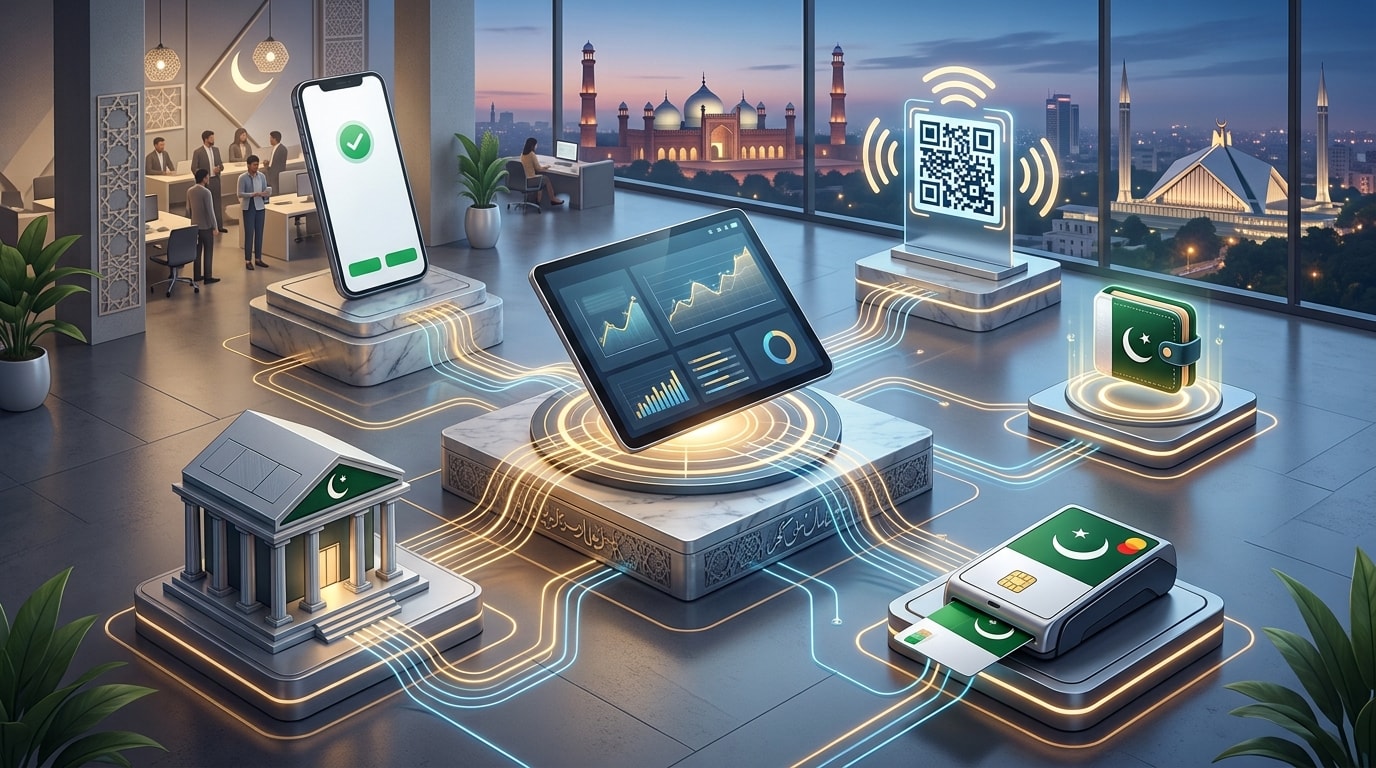
Rupin brings business financial tools together in one environment, helping businesses manage their business account and wallet, payments and collections, bookkeeping, reconciliation, and transaction visibility.
For businesses collecting customer payments, this means payment collection can sit closer to the broader financial workflow instead of being treated as an isolated task.
You can collect money, maintain visibility over transactions, and manage financial activity without constantly jumping between disconnected tools.
For small businesses, freelancers, and service providers, that can mean moving from simply receiving payments to having a more organized way to manage business money.
A Simpler Way to Manage Business Payments
Your next customer payment should not become another complicated task to chase.
Whether you are collecting money remotely, receiving payments at a physical location, managing regular client payments, or organizing everyday transactions, the right digital payment setup can remove unnecessary friction.
Rupin brings these business financial activities closer together.
Instead of treating payment collection as another task to manage manually, businesses can take a more connected approach to managing their money.
Get paid. Stay organized. Know what is happening with your business money.
Ready to simplify the way you collect and manage payments?
Download the Rupin app and bring business payments, collections, transactions, and financial management closer together in one place.
FAQs
1. How can a business collect payments online from customers?
A business can collect payments through payment links, bank transfers, QR payments, digital wallets, mobile payments, card payments, hosted checkout pages, and other supported digital payment channels. The right option depends on customer preferences and the business model.
2. What is the easiest way to collect payments online?
For businesses that sell remotely, payment links can be one of the simplest options. A business can generate a payment link and share it with a customer through a suitable communication channel.
3. How can a small business accept online payments?
A small business can use payment links, QR payments, bank transfers, cards, mobile payments, digital wallets, or other supported channels. The best combination depends on the business model, customers, transaction volume, and available payment infrastructure.
4. How can a business collect payments online without a website?
A website is not always required. Payment links, QR codes, and hosted payment experiences can allow businesses to collect digital payments without building a complete ecommerce website.
5. What are the most common online payment methods?
Common methods include payment links, bank transfers, QR payments, digital wallets, mobile payments, and card payments.
6. How can businesses collect payments online in Pakistan?
Businesses in Pakistan can use bank transfers, mobile payments, QR payments, cards, digital wallets, and other supported digital payment services. The right approach depends on the business and available payment infrastructure.
7. What is a payment link?
A payment link is a digital link that directs a customer to a payment experience. Businesses can share payment links through messaging apps, email, social media, or other suitable channels.
8. How do payment links help businesses collect customer payments?
Payment links give customers a direct payment route and can reduce the need to search for payment information or manually exchange payment details.
9. Can a business collect payments online without cash?
Yes. Businesses can use digital payment channels such as payment links, bank transfers, QR payments, cards, mobile payments, and digital wallets.
10. How can businesses track customer payments?
Businesses can track payments through transaction records, payment history, payment confirmation, and payment status information. A connected financial system can make this easier as payment volume increases.
11. Why is payment confirmation important?
Payment confirmation helps establish whether a transaction has been completed and makes it easier to associate payments with the correct customer or transaction.
12. What is the difference between a payment gateway and a payment processor?
A payment gateway generally refers to technology that securely transmits payment information to the relevant processing network. A payment processor handles transaction communication between the financial institutions involved.
13. How much does it cost to collect payments online?
Costs vary by provider, payment method, country, transaction type, and business volume. Charges may include transaction fees, monthly fees, settlement fees, currency conversion costs, or other charges.
14. Can businesses collect payments online for free?
Some services allow businesses to start without a monthly subscription, but online payment collection generally involves some form of transaction or service cost.
15. How can freelancers collect payments from clients online?
Freelancers can use payment links, payment requests, bank transfers, cards, or other supported payment methods. A strong workflow can combine clear requests, convenient payment options, confirmation, and organized records.
16. How can businesses collect recurring payments from customers?
Businesses that charge customers regularly can use recurring payment functionality where supported. The customer authorises payments according to an agreed schedule.
17. Is it safe to accept payments online?
Online payments can be secure when businesses use reputable providers and appropriate security measures. Businesses should consider payment data protection, secure payment pages, fraud protection, dispute handling, and applicable security standards.
18. What is the best way to collect payments from customers?
There is no single best method for every business. Payment links can work well for remote collection, QR payments can be useful at physical locations, and ecommerce businesses may need dedicated checkout options.
19. How can businesses make online payment collection easier?
Businesses can simplify payment collection by making payment requests clear, reducing unnecessary steps, offering relevant payment methods, confirming successful payments, organizing transaction records, and following up on outstanding payments.
20. Can Rupin help businesses collect payments?
Rupin provides business financial tools that bring business account functionality, payments and collections, transaction visibility, bookkeeping, and reconciliation closer together in one environment.
21. Is Rupin suitable for small businesses and freelancers?
Rupin is designed around everyday business financial management, making it relevant for small businesses, freelancers, and service providers that need to manage payments and business finances in one place.
22. How can a business get started with Rupin?
Businesses can explore Rupin’s business financial tools and download the Rupin app to get started with a more connected approach to managing business payments and financial activity.