



Verified by NADRA
NADRA identity verification helps protect your account and keep Rupin secure for everyone.

October 14, 2026
.Blog
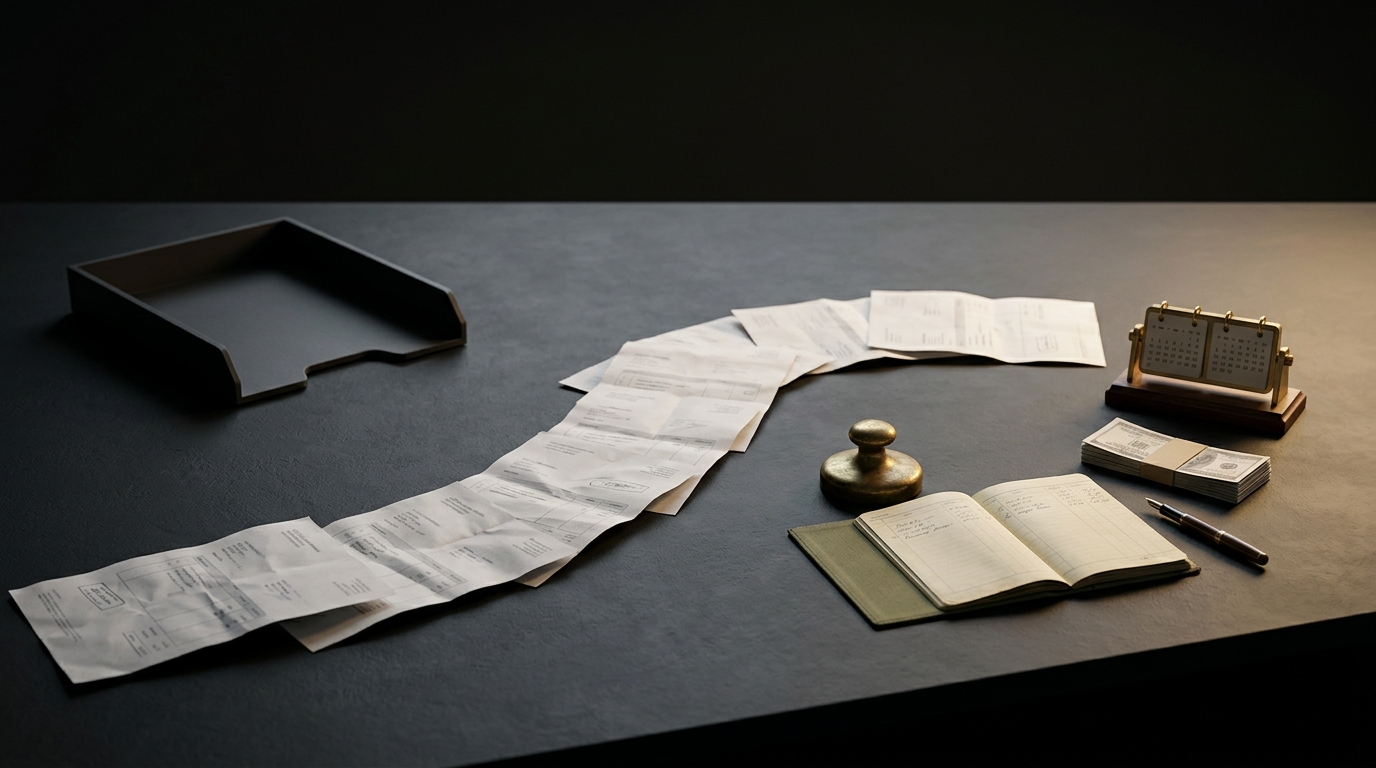
Strong sales should put your business in a stronger financial position. But when customers keep buying, and invoices keep piling up, your business can still struggle to pay its bills.
The problem is often not a lack of sales. It is the money sitting in unpaid invoices.
Revenue looks good on paper. Cash in the bank keeps your business moving.
Effective accounts receivable management helps small businesses track outstanding payments, collect money on time, protect working capital, and plan expenses with greater confidence.
It takes more than reminding customers to pay. You need clear payment terms, accurate invoices, reliable records, consistent follow-ups, and convenient payment methods.
With the right process and digital tools, you can spend less time chasing payments and more time building your business.
Accounts receivable is the money customers owe a business for goods or services they have already received but have not yet paid for. It commonly arises when a business sells on credit, allowing customers to pay according to agreed terms.
For example, a wholesaler supplies goods worth PKR 100,000 to a retailer with payment due in 30 days. Until the retailer pays, the outstanding amount is recorded as accounts receivable.
Under accrual accounting, revenue is generally recognized when the applicable revenue recognition criteria are met, rather than when cash arrives. This explains why a business can record revenue while still waiting for payment.
Accounts receivable commonly includes unpaid invoices, credit sales, outstanding customer balances, amounts owed for completed services, and payments due under agreed credit terms.
It is generally classified as a current asset when it meets the applicable criteria.
However, money customers owe your business is not the same as cash available to spend. Customers may pay late, dispute invoices, or fail to pay altogether.
Gross accounts receivable is the total amount customers owe before applicable allowances for expected credit losses.
Net accounts receivable is the gross balance after subtracting the relevant allowance.
For example, if customers owe PKR 500,000 and the business estimates an allowance of PKR 10,000 for expected credit losses, net accounts receivable is PKR 490,000.
This distinction helps businesses understand how much they expect to recover rather than assuming every outstanding amount will be collected.
Accounts receivable management is the process of recording, monitoring, and collecting money owed by customers. It covers the entire collection cycle, from assessing customer creditworthiness and issuing invoices to sending reminders, reconciling payments, and reviewing collection performance.
An effective process should answer three questions:
Without a structured system, payment information can become scattered across notebooks, spreadsheets, invoices, messaging applications, and bank statements. This makes it harder to identify overdue balances and can lead to unnecessary follow-ups or inaccurate records.
Accounts receivable represents money customers owe your business. It is generally recorded as an asset and becomes incoming cash when collected.
Accounts payable represents money your business owes suppliers or other parties. It is generally recorded as a liability and results in an outflow of cash when settled.
For example, a retailer may have PKR 80,000 in outstanding customer payments while owing a distributor PKR 60,000 for inventory.
Although the receivables exceed the payables, the retailer cannot automatically use that outstanding amount to settle the supplier's bill. The customer payments must arrive first.
Managing both sides of your finances helps you coordinate collections and obligations without disrupting daily operations.
Effective receivables management helps businesses maintain financial control, reduce avoidable collection delays, and make better decisions about incoming and outgoing cash.
Knowing how much customers owe you is useful. Knowing when the money is likely to arrive is even more valuable.
Monitoring outstanding invoices helps you anticipate collection timing and plan supplier payments, salaries, rent, and inventory purchases more confidently.
Money tied up in unpaid invoices is unavailable for immediate business needs. Collecting payments more efficiently can improve working capital and reduce the need for borrowing to cover routine expenses.
Regular monitoring helps identify warning signs such as repeated late payments, growing customer balances, unresolved disputes, and broken payment commitments. Early intervention can improve the opportunity to recover outstanding amounts.
Clear payment terms, accurate invoices, convenient payment methods, and respectful reminders reduce confusion and make payment expectations easier to understand.
Receivables reports help business owners assess customer payment behavior, review credit limits, identify collection problems, and make better decisions about purchasing and expansion.

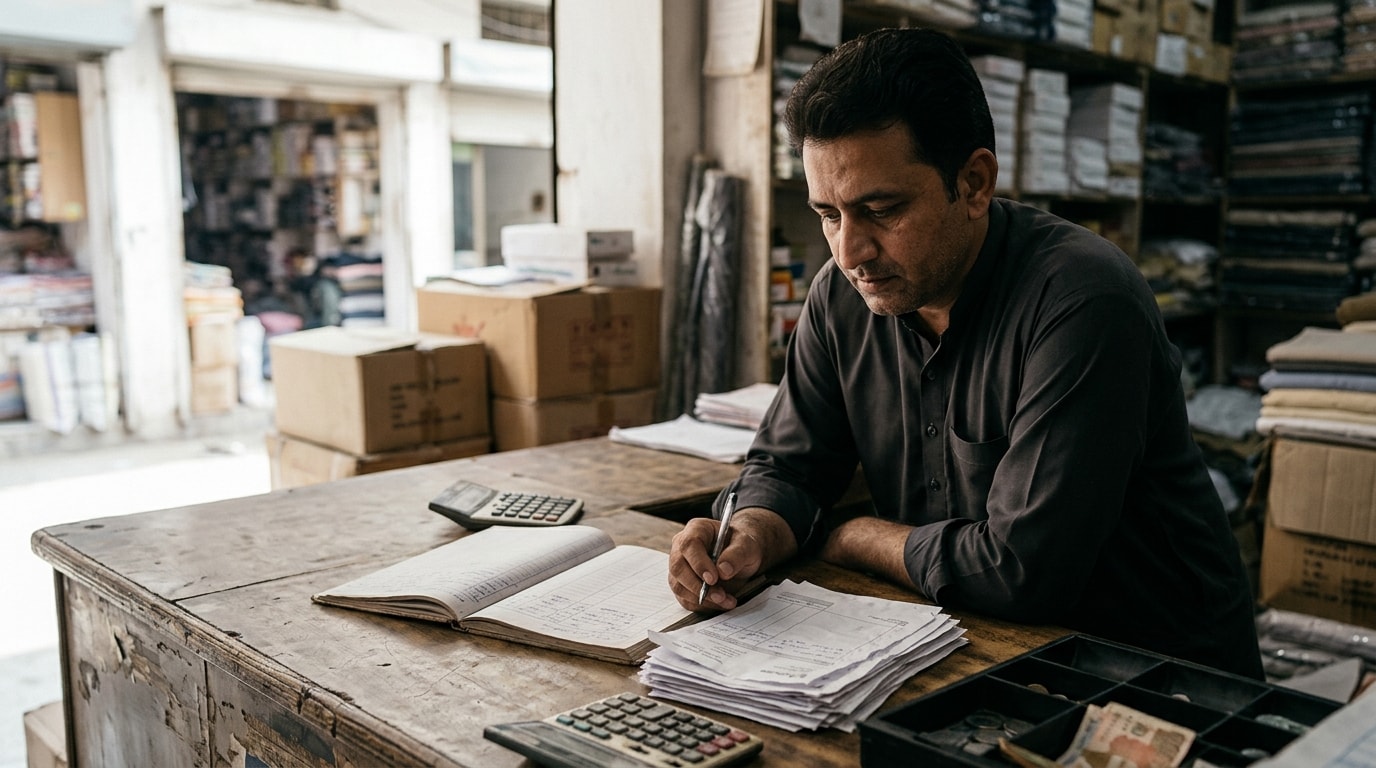
Small businesses often operate without a dedicated finance team. Owners may be responsible for sales, customer service, bookkeeping, and collections at the same time.
This creates several common challenges.
These problems often reinforce one another. A delayed invoice can lead to a missed payment deadline, followed by additional collection work and uncertainty about available cash.
The solution is a consistent process that addresses the causes of collection delays rather than treating every overdue invoice as an isolated problem.
A strong accounts receivable process should be accurate, consistent, and appropriate for the size of your business.
Define who can purchase on credit, how much they can owe, when payment is due, and what happens when payments are delayed.
Your policy should specify customer eligibility, credit limits, payment terms, procedures for overdue accounts, rules for payment arrangements, and circumstances in which further credit may be restricted.
Review previous payment history, existing balances, the length of the business relationship, available trade references, and the size of the proposed transaction.
A reliable customer may qualify for more flexible terms than a new customer requesting a large credit purchase. However, even established customers can create risk if their outstanding balances become too large.
Common payment terms include:
For example, 2/10 Net 30 generally means that a customer can deduct a 2% discount by paying within 10 days. Otherwise, the full amount is due within 30 days.
Early payment discounts can encourage faster collection, but the financial benefit should justify the cost of the discount. Any late payment fees should be communicated clearly and comply with the applicable agreement and law.
Send invoices as soon as the relevant billing requirements have been met.
A complete invoice should include business and customer details, an invoice number and issue date, a description of the goods or services supplied, the amount payable and applicable taxes, payment terms, the due date, and payment instructions.
Confirm that the invoice reaches the person responsible for processing payments. Errors, missing documents, and incorrect recipients can delay collection.
Use a reliable system to track customer balances, invoices, payment dates, outstanding amounts, and collection status.
For example:
A spreadsheet may be sufficient for a small operation. Businesses with higher transaction volumes may benefit from dedicated software.
A practical reminder schedule could include:
These timings are examples and should be adapted to payment terms and customer relationships.
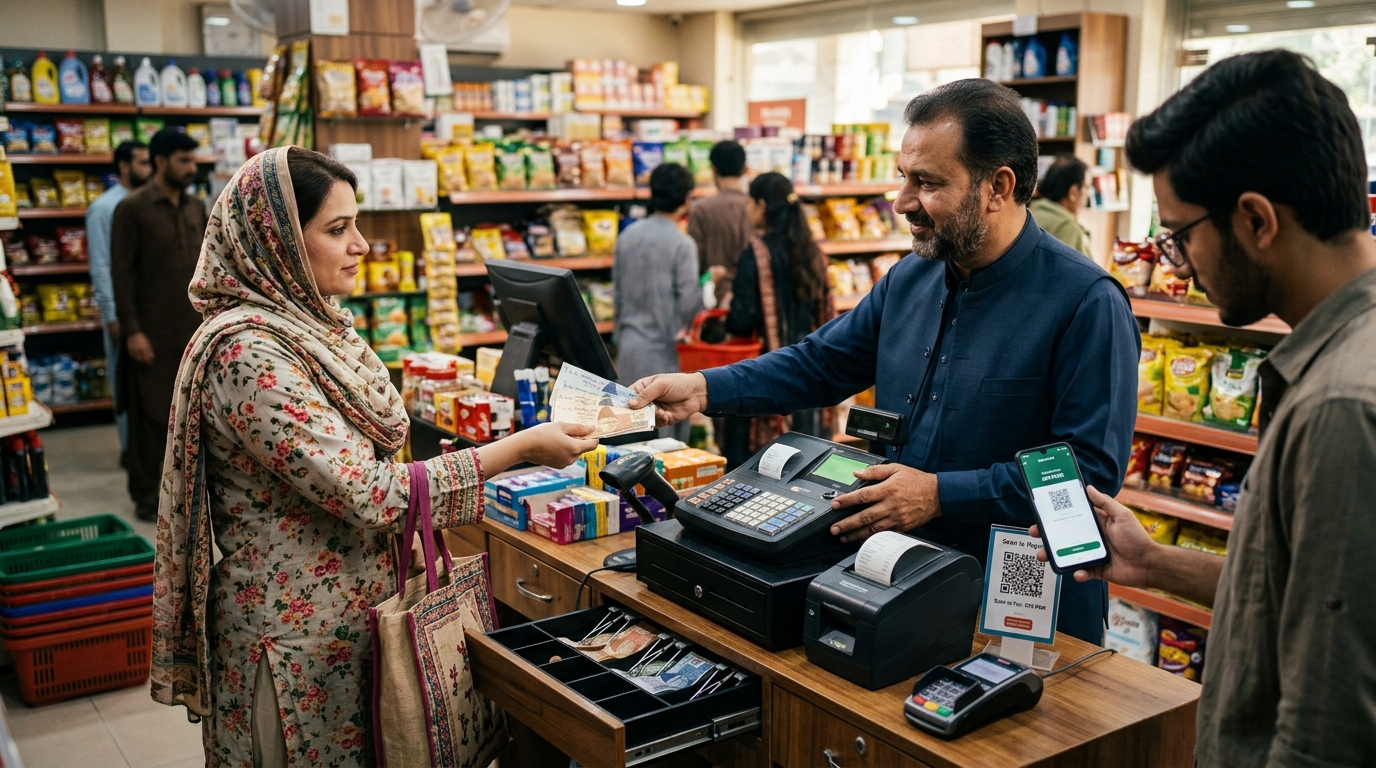
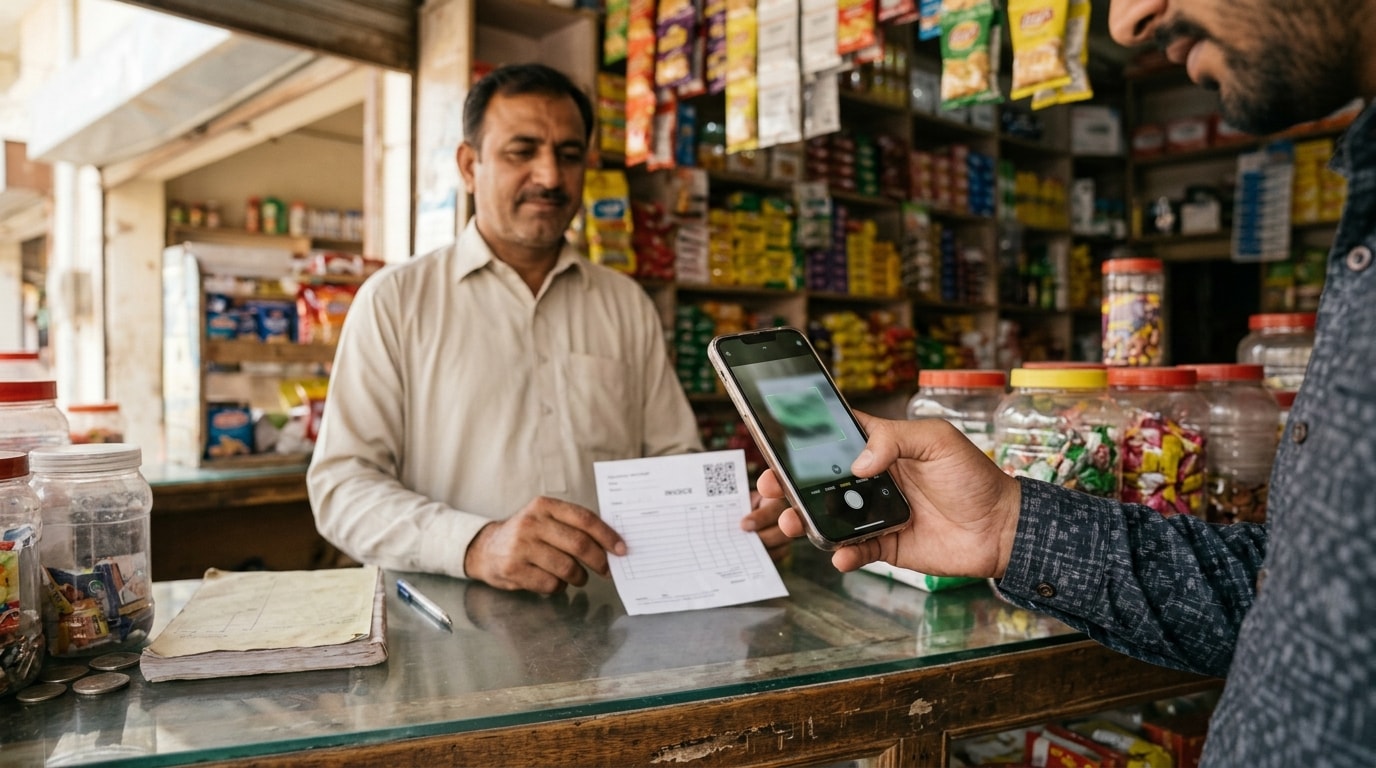
Provide suitable payment options based on your customers' needs and the methods your business supports. These may include bank transfers, QR code payments, payment links, and other appropriate digital payment methods.
For businesses in Pakistan, digital payment collection can reduce reliance on cash and in-person transactions.
Clear instructions and identifiable transaction records are essential regardless of the payment method.
Match incoming transactions against the correct customer balances and invoices.
Regular reconciliation helps identify settled invoices, record partial payments, investigate discrepancies, and avoid reminding customers about payments already received.
Identify why a payment has been delayed before deciding how to respond.
A missing invoice can be resent. A billing dispute may require supporting documentation. A customer experiencing temporary financial difficulties may be offered a reasonable payment arrangement where appropriate.
Document communications and payment commitments, reassess credit risk when necessary, and take proportionate action if delays continue.
Conduct a weekly review of invoices approaching their due dates, overdue balances, unreconciled payments, disputed invoices, customers with repeated delays, and expected collections against upcoming expenses.
A consistent review helps identify problems before they affect daily operations.
An accounts receivable aging report organizes outstanding customer balances according to how long they have remained unpaid or overdue.
Common categories include:
Suppose a distributor has PKR 135,000 in outstanding receivables, including PKR 25,000 in invoices more than 60 days overdue.
The total balance alone does not show which customers need immediate attention. An aging report helps the business prioritize collection efforts, review credit limits, identify repeated payment delays, and assess whether older balances may become uncollectible.
An invoice's age is not necessarily the same as its overdue period. An invoice issued 30 days ago under Net 30 terms may still be current.
Three useful metrics help small businesses evaluate collection performance.
Days Sales Outstanding, or DSO, measures the average number of days a business takes to collect its credit sales.
Formula:
DSO = (Average accounts receivable ÷ Net credit sales during the period) × Number of days in the period
Suppose average accounts receivable is PKR 300,000 and net credit sales over 90 days are PKR 900,000.
DSO = (PKR 300,000 ÷ PKR 900,000) × 90
DSO = 30 days
A lower DSO can indicate faster collection, while a rising DSO may signal increasing delays. The result should be interpreted alongside payment terms, industry practices, and sales patterns.
This ratio measures how frequently credit sales turn over relative to the average receivables balance.
Formula:
Accounts receivable turnover = Net credit sales ÷ Average accounts receivable
Average accounts receivable is commonly calculated by adding the opening and closing balances and dividing by two.
Suppose annual net credit sales are PKR 12,000,000, opening receivables are PKR 900,000, and closing receivables are PKR 1,100,000.
Average accounts receivable = PKR 1,000,000.
Turnover = PKR 12,000,000 ÷ PKR 1,000,000.
Accounts receivable turnover = 12 times per year.
A higher ratio generally indicates more frequent collection relative to the average balance, although sales growth and credit policies also affect the result.
This metric shows what proportion of total receivables is overdue.
Formula:
Overdue receivables percentage = (Overdue receivables ÷ Total accounts receivable) × 100
If total receivables are PKR 400,000 and PKR 100,000 is overdue, the overdue percentage is 25%.
Monitor this percentage over time to identify whether delayed payments are becoming a larger share of outstanding balances.
Together, these metrics provide a practical view of collection performance without requiring an elaborate reporting system.
Reducing DSO means removing unnecessary delays throughout the collection process.
Faster collections can improve working capital, particularly for businesses with substantial credit sales. The actual benefit depends on sales volume, payment patterns, and how much money can realistically be collected sooner.
Some customers may become insolvent, close their businesses, or remain unable to settle outstanding balances.
An amount that cannot reasonably be recovered may become bad debt, subject to the applicable accounting treatment.
Businesses can reduce this risk by assessing customer creditworthiness, setting appropriate credit limits, monitoring aging reports, and following up early.
Where required by the applicable accounting framework, an allowance for expected credit losses helps ensure receivables are not presented as though every outstanding amount will certainly be collected.
When an amount is determined to be uncollectible, the business should follow the appropriate write-off procedure. A late payment alone does not automatically justify a write-off.
Businesses sometimes need funds before customers are expected to pay. Invoice factoring and accounts receivable financing may help bridge this timing gap.
Invoice factoring involves selling eligible unpaid invoices to a third party at a discount. Depending on the arrangement, the provider typically collects payment from the customer.
Accounts receivable financing generally involves borrowing against eligible receivables as collateral. The business usually remains responsible for collecting customer payments and must meet its financing obligations.
Both options may provide earlier access to funds, but their costs, contractual conditions, and allocation of collection risk differ.
Evaluate the total cost, repayment obligations, customer implications, and collection risks before using either option. Neither replaces a reliable receivables management process.
As transaction volumes increase, manually tracking every invoice, due date, reminder, and payment becomes more difficult.
Accounts receivable automation uses digital tools to reduce repetitive administrative work and improve consistency.
Depending on the software, capabilities may include:
Evaluate potential solutions based on:
A spreadsheet may be sufficient for a business handling a few invoices each month. Businesses with frequent credit sales and numerous customers may benefit from dedicated software or a broader business management platform.
Verify the specific features available rather than assuming every product automates every accounts receivable task.
Use this checklist to maintain a consistent collection process.
Even when one person handles the entire process, defining responsibilities and maintaining a routine helps ensure that invoicing, collections, and reconciliation are not overlooked.
Managing customer balances, invoices, reminders, and payment records across different tools can make collections unnecessarily complicated.
Rupin supports businesses in Pakistan with digital business management and payment collection capabilities that can help organize these activities.
Rupin's digital khata and Cash Book capabilities help businesses maintain organized business records and customer balances, reducing dependence on scattered paper records.
Clearer records make it easier to review outstanding amounts and understand the status of customer accounts.
Rupin's invoicing capabilities support businesses in creating and sharing professional invoices.
Prompt, accurate invoicing helps customers understand what they owe and provides the information needed to process payment. Businesses should verify that invoice formats and tax details meet their specific regulatory requirements.
Rupin supports payment reminders through WhatsApp and SMS, helping businesses communicate payment requests more consistently without relying entirely on manual follow-ups.
Rupin supports digital payment options including QR codes, IBAN, and payment links, giving businesses additional ways to receive payments electronically.
These options can reduce unnecessary back and forth and help customers complete transactions through suitable payment channels.
Rupin's business management and payment capabilities support a more organized approach to financial activity.
Businesses should assess the specific reporting, reconciliation, and accounting features available to ensure they meet their operational requirements.
Rupin brings together important capabilities for business record keeping, invoicing, payment reminders, and digital payment collection.
Instead of relying entirely on memory and disconnected records, business owners can use these tools to establish a more consistent payment management routine.
Download the Rupin app and explore a more organized way to manage business payments. Maintain business records, share invoices, remind customers about payments, and give them convenient digital payment options.
Accounts receivable is money customers owe for goods or services already supplied but not yet paid for. It commonly arises from credit sales and is generally recorded as an asset until payment or another applicable adjustment.
Set clear credit terms, assess customer creditworthiness, issue invoices promptly, track balances, send reminders, reconcile payments, and review collection metrics. Rupin can support record-keeping, invoicing, reminders, and digital payment collection.
It helps businesses collect payments more consistently, improve cash flow visibility, reduce administrative errors, identify overdue invoices, and manage the risk of uncollectible balances.
Accounts receivable represents money customers owe your business. Accounts payable represents money your business owes suppliers or other parties.
The outstanding balance is generally calculated by adding customer amounts owed and subtracting payments and applicable adjustments. Financial reporting may also reflect allowances for expected credit losses.
It groups outstanding customer balances according to how long they have remained unpaid or overdue, helping businesses prioritize collection efforts and identify potential risks.
There is no universal target. An appropriate DSO depends on payment terms, industry practices, customer behavior, and sales patterns. Compare the result with agreed payment terms and monitor changes over time.
Divide net credit sales by average accounts receivable for the same period. A higher ratio generally indicates more frequent collection relative to the average receivables balance.
Issue accurate invoices promptly, establish clear payment terms, send reminders before deadlines, provide convenient payment methods, and resolve disputes quickly.
Use professional reminders, clear payment instructions, early communication, documented commitments, and reasonable payment arrangements where appropriate.
Automation can reduce repetitive work through invoice tracking, payment reminders, centralized records, payment status visibility, and reporting. Capabilities vary by product.
Options include spreadsheets, bookkeeping applications, accounting software, and dedicated receivables tools. Choose based on transaction volume, features, ease of use, and cost. Rupin offers digital business records, invoicing capabilities, reminders, and digital payment options.
Accounts receivable management focuses on recording, monitoring, and collecting customer balances. The invoice to cash process covers the broader journey from issuing an invoice through receiving and recording payment.
Assess customer creditworthiness, set appropriate credit limits, monitor overdue balances, follow up early, and review the recoverability of older receivables.
Invoice factoring involves selling eligible unpaid invoices to a third party at a discount. Accounts receivable financing generally involves borrowing against receivables as collateral. Both provide potential access to funds sooner, but their costs and risks differ.
Rupin supports businesses in Pakistan with digital business records, digital khata and Cash Book capabilities, invoicing, WhatsApp and SMS payment reminders, and digital payment options including QR codes, IBAN, and payment links.
Growing a business is not just about generating more sales. It is about collecting the money you earn, maintaining control over your finances, and keeping operations moving.
Effective accounts receivable management helps you achieve this through clear payment terms, accurate invoicing, consistent follow-ups, reliable records, and regular reviews of outstanding balances.
Rupin supports this approach with digital business records, invoicing capabilities, payment reminders, and digital payment collection.
Spend less time chasing payments and more time building your business.
Download the Rupin app to explore a more organized way to manage business records, share invoices, remind customers about payments, and collect payments digitally.
Verified identities and regulated payments help keep your business and money secure.
NADRA identity verification helps protect your account and keep Rupin secure for everyone.
Rupin operates under the State Bank of Pakistan’s EMI Pilot framework for secure digital payments.
5M+
Businesses trust Rupin
2B+
Monthly transaction volume
4.5
Play Store rating