

Verified by NADRA
NADRA identity verification helps protect your account and keep Rupin secure for everyone.

October 8, 2026
.Blog
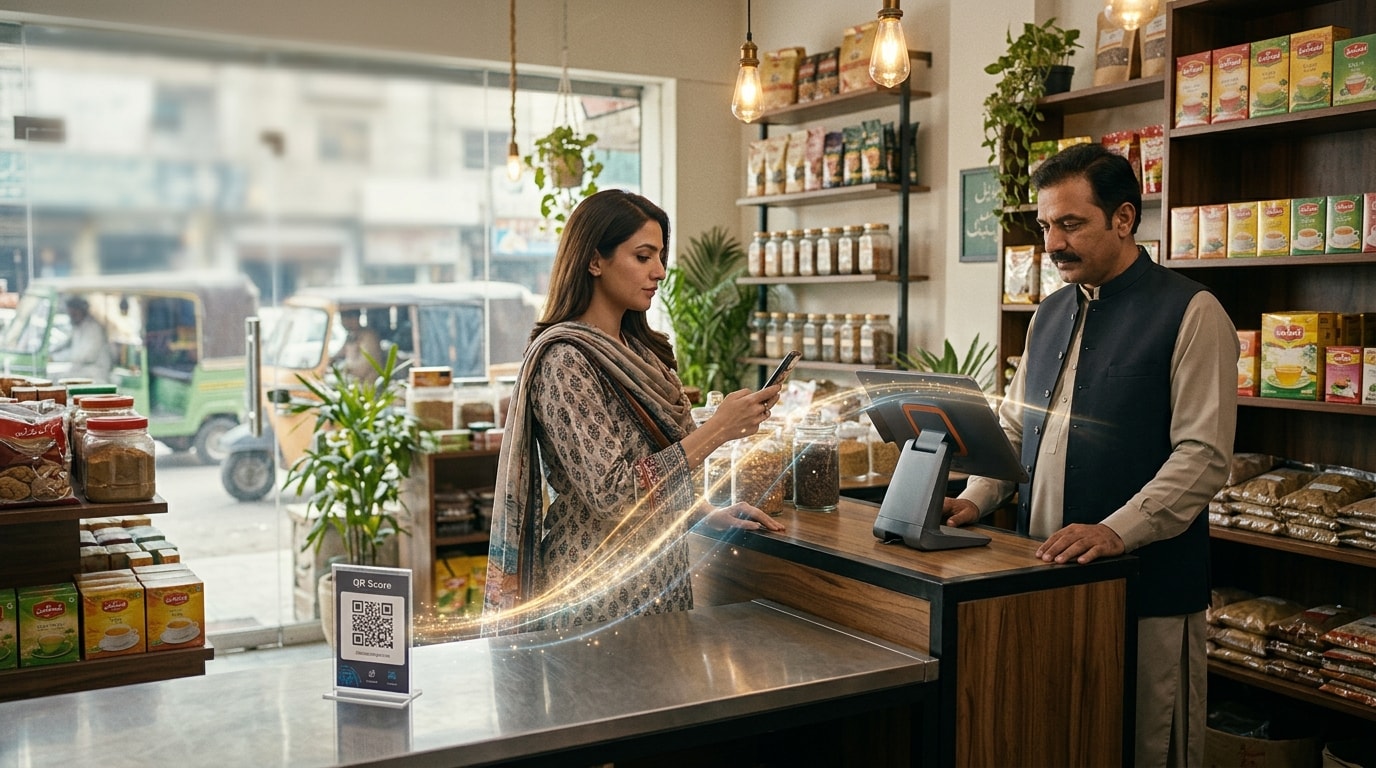
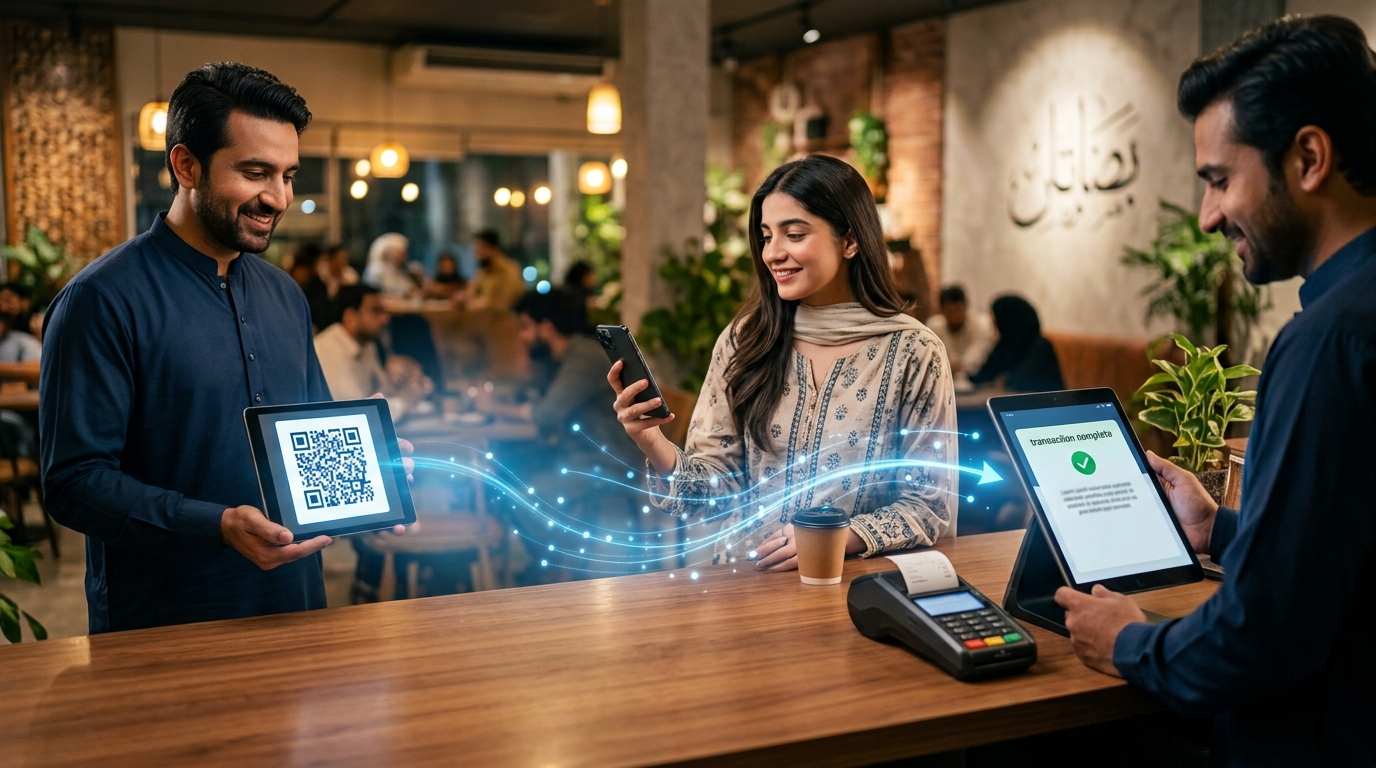
QR code payments in Pakistan have made digital payments remarkably simple. A customer scans a QR code using a supported banking app or digital wallet, checks the payment details, confirms the transaction, and pays without handing over cash or using a physical card.
For the customer, it can take only a few seconds.
For the business, however, there is much more happening behind that simple scan.
The payment moves through a connected ecosystem involving banks, digital wallets, payment service providers, regulated financial institutions, the State Bank of Pakistan, and payment infrastructure such as Raast. Pakistan's standardized QR framework was introduced to support interoperable QR payments, helping participating institutions process standardized QR codes across different payment schemes.
That means a QR code is not the payment system itself. It is the interface customers interact with. The infrastructure behind it is what actually processes and routes the payment.
And that distinction matters for businesses.
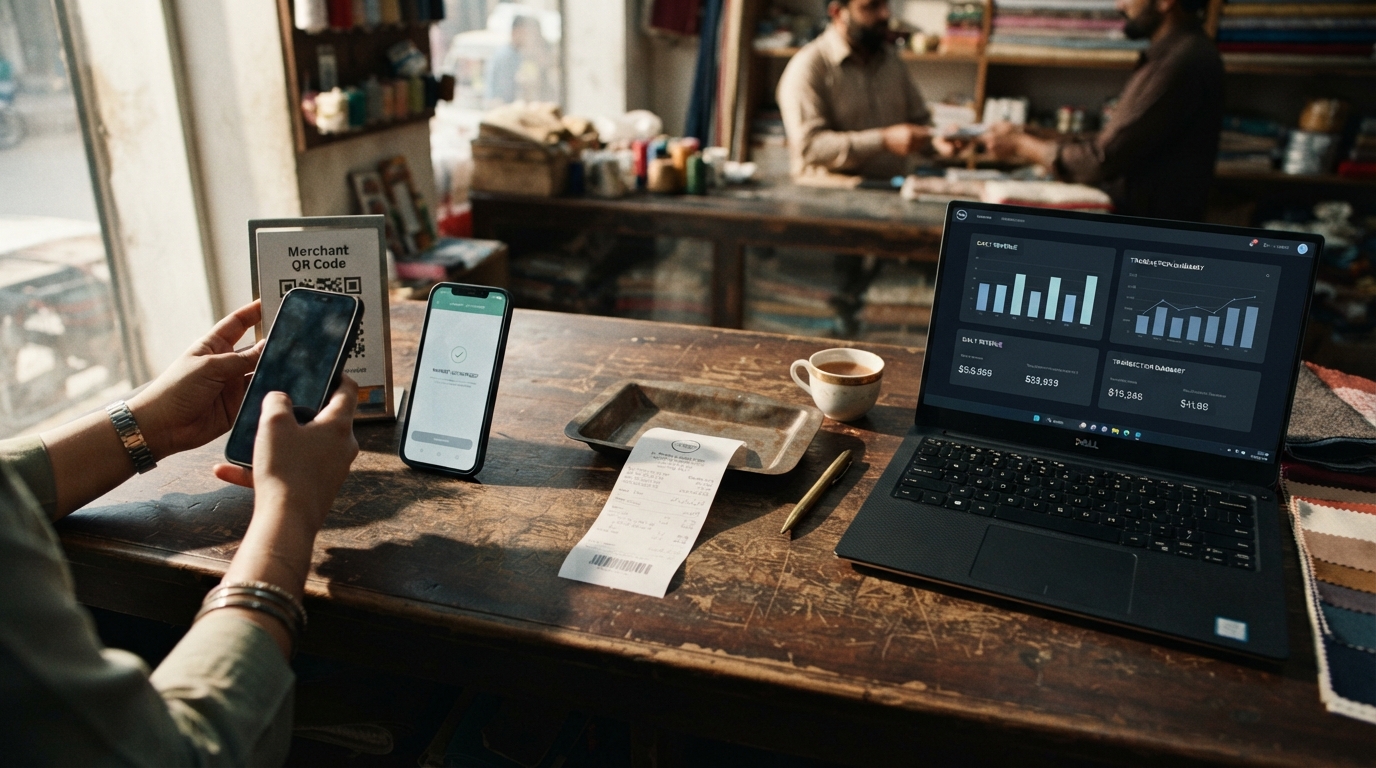
A QR payment can be more than a convenient way to collect money. When connected with the right business systems, it can become part of a broader workflow covering payments, sales, invoices, reconciliation, bookkeeping, and financial visibility.
This guide explains how QR code payments work in Pakistan, how Raast QR and Raast P2M payments fit into the ecosystem, the difference between static and dynamic QR codes, how businesses can accept QR payments, what customers should know about safety, charges, limits, refunds, and how a platform such as Rupin can connect payment acceptance with broader business financial management.
A QR code payment is a digital payment method that allows a customer to pay a business by scanning a Quick Response code through a supported banking app, digital wallet, or payment application.
Instead of manually entering account details, the customer scans the code, reviews the payment information, authorizes the transaction, and completes the payment digitally.
The QR code itself does not contain the money.
Think of it as a digital payment instruction.
Depending on the QR format, the code can contain information used to identify the merchant, financial institution, payment scheme, account details, transaction amount, or other information required to initiate the payment.
A simple way to understand it is to think of a QR code as a pre filled digital payment slip.
The relevant payment information is already encoded into the QR code. The customer scans it, checks where the money is going and how much is being paid, authorizes the transaction, and sends the payment.
For customers, this creates a faster and more convenient payment experience.
For businesses, it creates a digital payment channel that can potentially connect the payment with sales, invoices, transaction records, and financial management.
A QR payment may look like a simple scan, but several steps happen between the moment a customer points a phone at the code and the moment the business receives confirmation.
The customer sees only a few taps and a confirmation message.
Behind the scenes, the payment application passes the transaction into the relevant financial infrastructure, which routes the payment to the merchant's financial institution or payment provider.
For eligible Raast P2M transactions, the system is designed to provide instant transaction confirmation or rejection notifications to customers, while digital account statements are updated in real time.
One point is especially important:
Scanning a QR code is not the same as completing a payment.
The transaction needs to be authorized, processed, and confirmed before it should be treated as successful.
A simplified QR payment flow looks like this:
Customer → Banking App or Wallet → Payment Infrastructure → Merchant Financial Institution → Business
The exact routing depends on the transaction and the institutions involved.
The customer scans the code.
The banking app or wallet reads the QR information and prepares the transaction.
The payment then moves through the relevant payment infrastructure. For eligible Raast P2M transactions, Raast provides the infrastructure supporting merchant payments.
The merchant's bank, wallet, or payment provider receives the transaction and makes the relevant payment information available through its merchant service.
This is why the QR code should not be confused with the payment system itself.
The QR code is the interface.
The infrastructure behind it is what processes the payment.
For customers, most of this remains invisible.
For businesses, however, the infrastructure behind the QR code can affect transaction visibility, settlement, reconciliation, refunds, and reporting.
Raast is Pakistan's instant payment system operated by the State Bank of Pakistan.
For QR payments, Raast provides an important part of the infrastructure supporting interoperable digital payments.
Pakistan's standardized QR framework was introduced to support both Person to Person and Person to Merchant payments, with QR payments designed to operate through the Raast instant payment ecosystem.
The easiest way to understand the relationship is:
The QR code is the address.
Raast is part of the road network.
The customer's bank or wallet is the vehicle.
The merchant's account is the destination.
The customer does not need to understand the entire payment infrastructure. They simply scan the QR code, review the payment details, authorize the transaction, and let the underlying system handle the routing.
For businesses, this makes Raast an important part of the infrastructure supporting digital merchant payments in Pakistan.
Raast P2M means Raast Person to Merchant.
It is designed specifically to help businesses and merchants accept digital payments.
SBP's Raast P2M service supports several payment acceptance methods, including:
This makes Raast P2M broader than QR payments alone, although QR remains one of its key merchant payment channels.
For a customer, the experience can be as simple as:
Scan → Check → Confirm → Pay
For a business, that same transaction becomes a received payment that can potentially be connected with sales, invoices, transaction records, and broader financial workflows.
That distinction matters.
A customer wants a payment experience that is fast and convenient.
A business needs to know what was paid, how much was received, which transaction it belongs to, and what happens to that payment after the customer leaves.
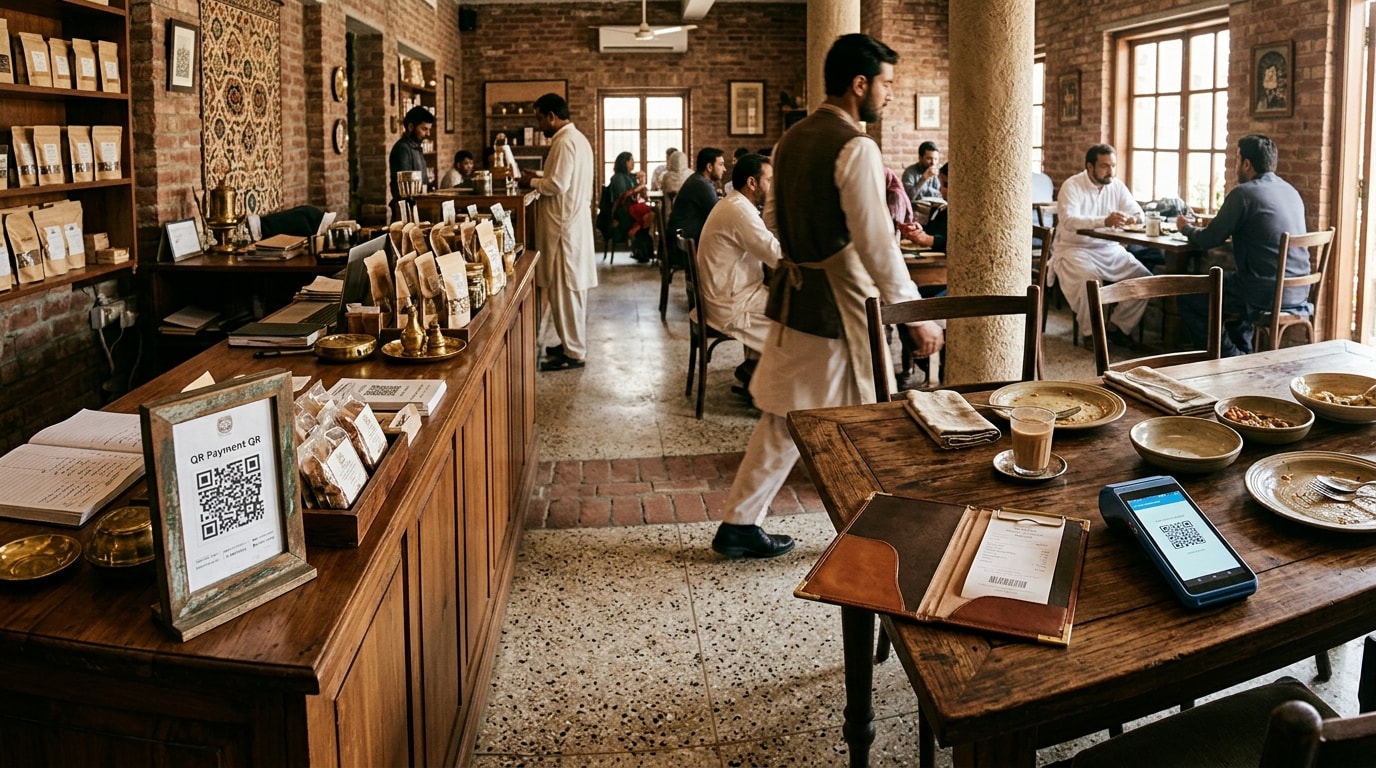
Interoperability means different participating banks, wallets, payment institutions, and payment schemes can work together rather than operating as completely separate payment networks.
Pakistan's standardized QR framework was introduced to promote interoperability by enabling participating QR scanning devices, including mobile phones, to scan and process standardized QR codes regardless of the issuer or scheme.
For businesses, this can reduce the need to display separate payment codes for different institutions.
For customers, it can make QR payments more convenient because they do not have to think as much about which institution issued the merchant's QR code.
The exact functionality still depends on the participating bank, wallet, payment application, and payment scheme.
The bigger idea is simple:
One standardized payment interface can connect more customers with more businesses.
QR payments in Pakistan are not limited to shopping.
There are two important use cases.
P2P means Person to Person.
A person can generate or share a QR code through a supported financial application and use it to receive money from another person.
Instead of manually entering long account details, the sender can scan the recipient's QR code, review the payment information, authorize the transaction, and transfer the money.
Pakistan's standardized QR framework supports P2P QR payments alongside merchant payments.
P2M means Person to Merchant.
This is the model customers encounter when paying a shop, restaurant, salon, clinic, retailer, service provider, or another business.
The merchant displays a QR code.
The customer scans it.
The customer confirms the payment.
The merchant receives payment confirmation.
Raast P2M was specifically launched to facilitate digital payment acceptance for merchants and businesses.
The two main types of QR codes used for payments are static QR codes and dynamic QR codes.
A static QR code is generally created once and reused.
A dynamic QR code can be generated specifically for a particular transaction and can contain transaction specific information such as the amount.
SBP's QR framework supports both static and dynamic QR codes for merchant payments.
Static QR codes can work well for businesses with straightforward payment requirements.
A small retailer, market stall, freelancer, salon, or food outlet can display a permanent QR code at its payment counter.
The customer scans the code and enters the amount.
The main advantage is simplicity.
Dynamic QR codes become more useful when every transaction needs to be associated with a specific amount or order.
For example, a restaurant can generate a QR code for a specific bill, an online business can generate a payment QR for a particular order, and a service provider can generate a QR code connected to a specific invoice.
This can reduce manual entry and make payment reconciliation easier.
The right choice depends on how the business actually collects payments.
Paying with a QR code is generally straightforward.
Open a mobile banking app, digital wallet, or another supported payment application.
Look for Scan, Scan to Pay, QR Payment, Pay by QR, or an equivalent option.
Point the phone camera at the merchant's QR code.
Check the merchant name or other payment details displayed by the application.
With a static QR code, the customer may need to enter the amount.
With a dynamic QR code, the amount may already be included.
Confirm the transaction using the authentication method required by the application.
Wait for confirmation rather than assuming the payment succeeded simply because the QR code was scanned.
The process can be summarized as:
Scan → Verify → Authorize → Confirm
Customers may encounter QR payment functionality through mobile banking applications and digital wallets.
The exact interface varies between providers.
A customer may see options such as:
The underlying experience is similar.
The customer scans the QR code, reviews the payment information, and authorizes the transaction.
The important difference is not necessarily the button used in the application.
It is the payment infrastructure supporting the transaction.
Pakistan's QR payment ecosystem includes banks, mobile wallets, Electronic Money Institutions, Payment Service Providers, and other regulated participants.
Customers may encounter QR payment functionality through services such as Easypaisa, JazzCash, SadaPay, NayaPay, as well as participating bank applications.
SBP's Raast P2M participant ecosystem includes a broad range of banks, EMIs, and payment providers.
This growing ecosystem matters because QR payments are not dependent on a single application.
The objective of interoperability is to allow participating institutions to communicate through a standardized payment framework.
For businesses, the process generally begins with a bank or regulated payment provider that offers merchant payment acceptance.
A typical merchant QR setup looks like this:
The exact onboarding requirements vary by provider and business type.
SBP's Raast P2M framework requires merchant service providers to conduct appropriate due diligence when onboarding merchants.
But receiving a QR code is only the beginning.
Businesses should also consider transaction visibility, reconciliation, security, reliability, refunds, reporting, charges, and integration with business records.
A QR code does not need to stay at a traditional cash counter.
Businesses can use QR payments at:
The QR code should be clearly visible and easy for customers to scan.
For dynamic QR payments, the code can also be generated for a specific transaction or invoice depending on the payment solution.
The bigger opportunity is to think of a QR code as a payment touchpoint rather than simply a sticker on a counter.
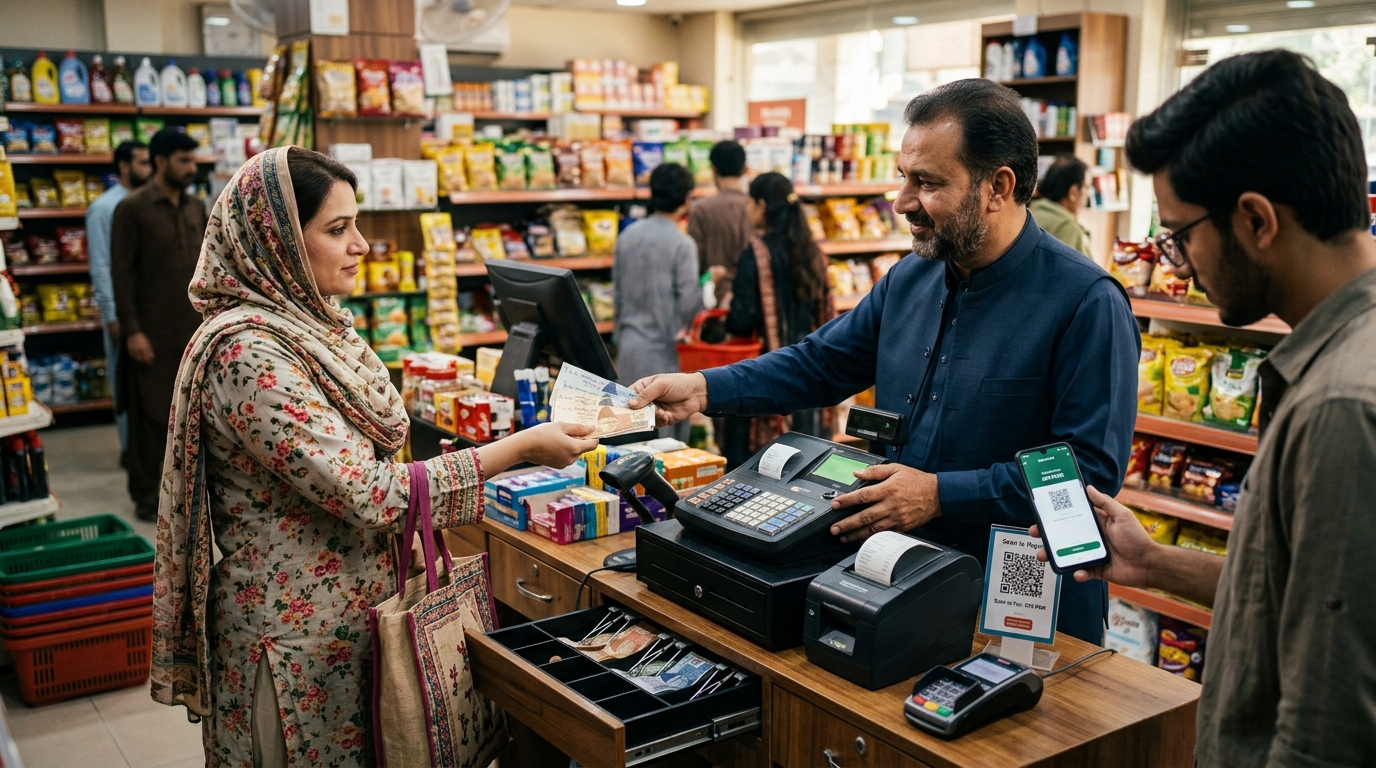
QR payments can be particularly useful for small businesses because they provide another digital payment acceptance option without necessarily requiring dedicated card hardware.
This can make QR payment acceptance attractive to retailers, freelancers, restaurants, salons, home-based businesses, service providers, and other small and growing businesses.
A QR code can provide a lighter payment acceptance interface.
But it does not make QR payments a replacement for every other payment method.
Customers may still prefer cash or cards.
The smarter approach is to offer the payment options customers actually use while keeping the business's payment records organized.
A POS terminal and a merchant QR code can both support digital payment acceptance, but they use different infrastructure.
QR payments do not make POS terminals obsolete.
A business can use both.
For example, a retailer could accept cash, cards, QR payments, bank transfers, and payment links.
The objective is to make payment easier for customers while keeping the business's payment records manageable.
Settlement refers to the process through which received funds are made available to the merchant.
The timing depends on the payment method, provider, transaction flow, and applicable arrangements.
Raast is designed for instant payments, and its P2M framework provides instant transaction confirmation or rejection notifications to customers.
The Merchant Discount Rate, commonly called MDR, is a charge that can apply to merchant payment acceptance depending on the payment arrangement.
Businesses should not assume that every QR payment has the same fee structure.
Fees can vary by provider, transaction type, merchant arrangement, and applicable regulatory rules.
The safest approach is to confirm the current commercial terms during merchant onboarding.
Businesses should understand not only what customers pay, but also what the business pays and when funds become available.
QR code payments can be secure when customers use legitimate payment applications and follow basic security practices.
The biggest risks can come from social engineering and fraudulent payment instructions rather than the concept of QR payments itself.
For example, someone could place a fake QR sticker over a legitimate merchant QR code.
Customers should therefore treat a QR code like any other payment instruction.
Before confirming a transaction, customers should:
The simplest rule is:
Scan carefully. Verify carefully. Pay deliberately.
Businesses should also verify incoming payments through their own merchant interface or transaction records rather than relying solely on a customer screenshot.
A QR payment can fail for several reasons, including:
A failed payment should not automatically be treated as successful.
The customer should check the transaction status and confirmation.
Businesses should verify incoming payments through their own merchant interface or transaction records instead of relying only on a screenshot.
Refunds depend on the merchant, payment provider, transaction type, and applicable procedures.
SBP's Raast P2M framework supports customer initiated return and refund requests and requires merchant service providers to provide functionality for merchants to accept or reject applicable refund or return requests.
For businesses, accurate transaction records are particularly important because the original transaction needs to be identifiable when handling a refund or return.
QR payment charges are not identical across every provider.
Customers using Raast P2M should not be charged a fee by regulated entities for paying their transactions under SBP's P2M instructions.
Merchant side charges can depend on the provider and applicable arrangement.
Businesses should therefore distinguish between:
Fee structures can change, so businesses should confirm current pricing with their payment provider before onboarding.
There is no single universal QR payment limit that applies identically to every customer and provider.
Limits can depend on:
Customers making large transactions should check the current limit shown by their bank, wallet, or payment provider.
A QR code itself does not determine the payment limit.
The applicable financial institution, account, transaction type, and payment rules determine the relevant limits.
EMV QR refers to a standardized QR framework used for payment systems.
SBP's earlier QR standardization work incorporated EMVCo QR Code specifications as part of its effort to standardize payment QR codes in Pakistan.
Customers do not need to understand the technical specifications to make a QR payment.
The importance is behind the scenes.
Standardization gives different payment systems a common language through which QR payment information can be interpreted and processed.
Merchant acquiring refers to the part of the payment ecosystem that enables a business to accept payments and supports the processing of those transactions.
The acquiring institution or merchant service provider can provide the necessary payment acceptance infrastructure and merchant services.
From the customer's perspective, this layer is almost invisible.
For the business, however, the provider behind the QR code can affect:
That is why choosing a payment solution should involve more than asking whether it can generate a QR code.
Pakistan's payment ecosystem includes banks, Microfinance Banks, Electronic Money Institutions, Payment System Operators, Payment System Providers, and other regulated participants.
Electronic Money Institutions are non-bank entities operating under SBP's regulatory framework for electronic money services.
Together, these institutions help connect customers, merchants, wallets, payment applications, and payment infrastructure.
For businesses, the important point is not to understand every technical layer.
It is to understand who provides the payment service, how transactions are processed, what visibility the business receives, and how payments connect with its operations.
QR payments are one part of Pakistan's wider transition toward digital payments.
SBP's latest payment system reporting shows that Raast P2M had more than 2.1 million merchants onboarded by the end of the reported quarter, while Raast processed hundreds of millions of transactions during that quarter.
That matters because digital payment adoption is not only about replacing cash.
It is also about creating a more connected financial ecosystem.
Every digital payment can potentially become part of a transaction record.
For businesses, that can support:
QR payments are therefore not simply another way to pay.
They are part of the infrastructure through which businesses can become more digitally connected.
Cash remains useful and widely used.
QR payments simply give customers and businesses another option.
For businesses, the biggest advantage may not be that QR payments eliminate cash.
It is that digital transactions can be connected more easily to other business processes.
Neither method is universally better.
QR payments can offer lower hardware dependency, while POS terminals remain important for card acceptance.
Businesses can use both depending on their customers and operational requirements.
A bank transfer can require a customer to enter account details manually.
QR payments can simplify that process by encoding relevant payment information into a scannable format.
The destination may be the same.
The difference is how much manual effort is required to reach it.
This makes QR payments useful when customers need a quick way to pay at a counter, against an invoice, for a specific order, or through another payment touchpoint.
Customers can pay through a device they already carry.
Businesses can accept certain digital payments without depending entirely on dedicated payment terminals.
QR payments can sit alongside cash, cards, bank transfers, and payment links.
Electronic payment records can make payment tracking easier.
Customers familiar with mobile payments can complete transactions without handling cash.
QR payments give smaller businesses another path into Pakistan's digital payment ecosystem.
When QR payments are connected to business systems, the payment can become part of a broader record rather than remaining an isolated transaction.
That can make it easier to understand what was sold, what was received, and how the transaction fits into the wider financial picture.
A business should not evaluate a QR payment solution only by asking whether it can generate a QR code.
The more important questions are:
The QR code is only the front door.
The system behind it determines how useful the payment solution becomes.
For a customer, the job may end when the payment is confirmed.
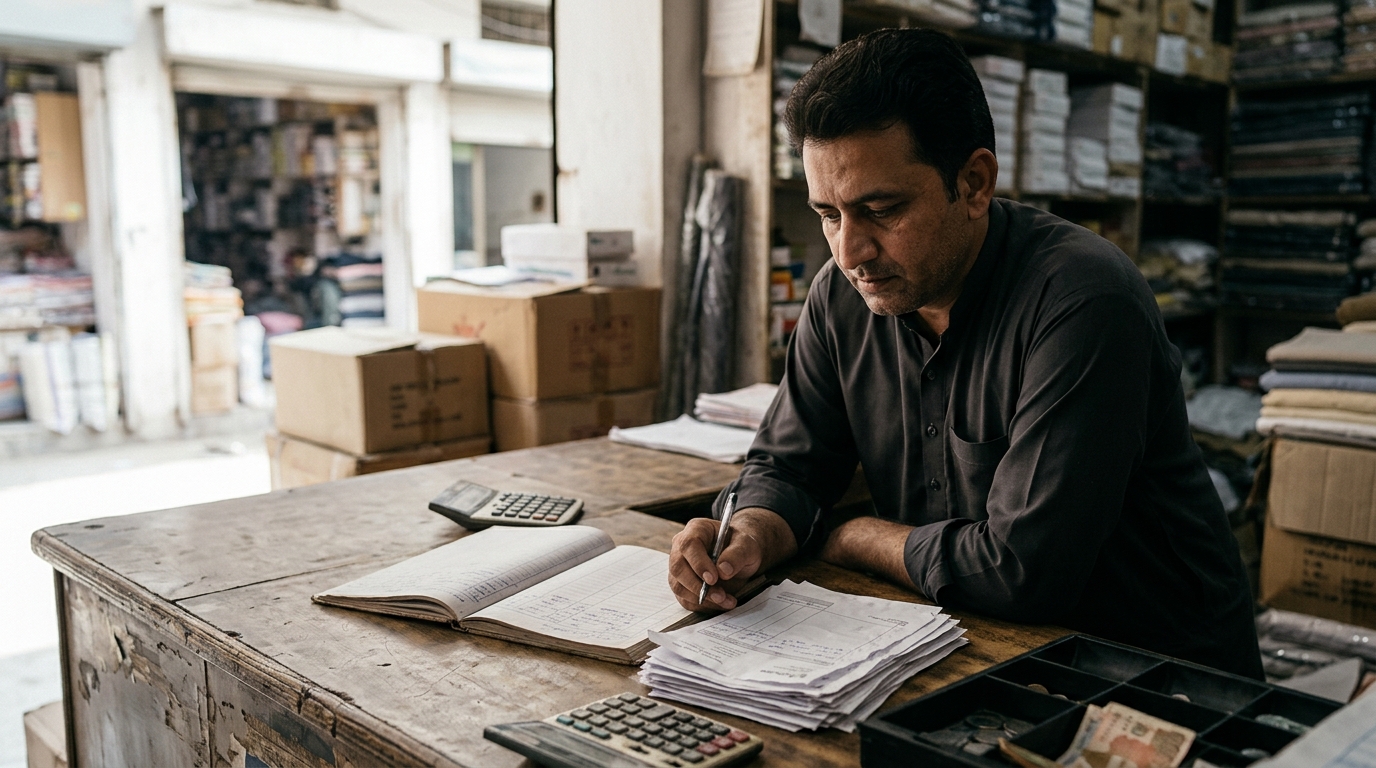
For a business, that is where another job begins.
The business still needs to know:
What was sold?
Who paid?
How much was received?
Which invoice did the payment belong to?
What expenses were associated with the sale?
What is the actual profit?
This is where Rupin takes QR payments beyond simple payment acceptance.
Rupin brings payments, sales, expenses, invoices, bookkeeping, and financial visibility into one connected business platform. Its current product offering allows businesses to accept payments through QR, IBAN, and payment links while keeping broader business financial activity organized in one place.
That means a QR payment does not have to remain an isolated event.
It can become part of the business's wider financial workflow.
Rupin is designed to help businesses:
Rupin also states that it operates under the State Bank of Pakistan's EMI Pilot framework and uses identity verification as part of its security approach.
The distinction is important.
A QR code makes it easier for a customer to pay.
A connected business platform can help the business understand what happened after the payment.
The scan is only the beginning.
QR payments are moving from being an alternative payment method toward becoming an increasingly important part of Pakistan's digital payment infrastructure.
The growth of Raast P2M, expanding merchant onboarding, interoperable QR standards, mobile banking, digital wallets, and business payment solutions all point toward a payment environment where customers increasingly expect digital options at the point of sale.
The long-term opportunity is bigger than simply replacing cash.
As payments become digital, they can become more connected to invoices, sales, bookkeeping, reconciliation, and financial reporting.
That is where QR payments become particularly valuable for businesses.
The scan is only the beginning.
The next payment does not need to involve cash, change, or a complicated payment process.
With Rupin, businesses can accept payments through QR, IBAN, and payment links while keeping sales, expenses, invoices, and financial activity connected in one place.
Instead of simply collecting a payment, businesses can build a clearer picture of what is happening across their financial operations.
Accept the payment. Track the transaction. Understand the numbers.
For businesses ready to move from simply accepting digital payments to managing business money more intelligently, Rupin provides a more connected way to do it.
Download the Rupin app and make the next payment a simpler one.

A QR code payment is a digital payment initiated by scanning a payment QR code through a supported banking app, digital wallet, or payment application. Pakistan's standardized QR framework supports interoperable Person to Person and Person to Merchant payments.
A customer scans a merchant QR code, reviews the payment information, verifies the merchant and amount, and authorizes the transaction. The payment is then processed through the relevant payment infrastructure and confirmation is provided according to the applicable service.
Raast QR payment refers to QR based payments supported through Pakistan's Raast instant payment ecosystem. Raast P2M is specifically designed to help merchants and businesses accept digital payments.
Raast P2M means Raast Person to Merchant. It enables businesses to accept digital payments through methods including static QR, dynamic QR, merchant alias, IBAN, and Request to Pay.
Participating institutions support interoperable QR payments under Pakistan's standardized QR framework. Exact functionality can vary by bank, wallet, application, and payment scheme.
A business can approach a bank or regulated payment provider offering merchant payment acceptance, complete the required onboarding process, and receive the relevant QR payment credentials.
A merchant QR code is a payment QR code designed to allow customers to pay a business. It can be static or dynamic depending on how the payment solution is implemented.
A static QR code generally stays the same and allows the customer to enter the payment amount. A dynamic QR code can be generated for a specific transaction and may already contain the payment amount.
QR payments can be secure when customers use legitimate applications, verify the merchant and amount, and protect their authentication details. Customers should also watch for tampered QR codes and suspicious payment instructions.
QR payment limits can depend on the bank, wallet, account type, verification level, transaction type, and applicable rules. Customers should check the current limit shown by their payment provider.
Customer charges depend on the applicable payment service and transaction type. Under SBP's Raast P2M instructions, regulated entities are not to charge customers for paying their transactions. Merchant side charges can depend on the provider and applicable arrangement.
Yes. Pakistan's standardized QR framework supports Person to Person QR payments as well as Person to Merchant payments.
Yes. QR codes can be incorporated into invoice and transaction specific payment flows depending on the payment provider and implementation.
A QR payment can fail because of connectivity problems, insufficient funds, authentication issues, transaction limits, application problems, or temporary service interruptions. Customers should check the transaction status before attempting another payment.
Refunds depend on the merchant, payment provider, transaction type, and applicable procedures. The Raast P2M framework includes functionality for handling applicable return and refund requests.
EMV QR refers to a standardized QR framework used for payment systems. SBP's QR standardization work incorporates EMVCo QR specifications as part of its broader approach to standardized payment QR codes.
QR payments can offer digital transaction records, convenient payment acceptance, reduced dependence on physical cash, and easier integration with digital business systems. Cash remains useful, so businesses can support both.
Neither method is universally better. QR payments can offer lower hardware dependency, while POS terminals remain important for card acceptance. Businesses can use both depending on their customers and operational requirements.
QR payments can make digital payment acceptance easier, give customers another way to pay, reduce dependence on physical cash, and support the wider digitalization of business payments in Pakistan.
Rupin combines QR payment acceptance with broader business financial management. Businesses can accept payments through QR, IBAN, and payment links while also managing sales, expenses, invoices, bookkeeping, and financial visibility in one connected platform.
A business can explore Rupin's merchant payment offering and complete the required account and business onboarding process. Rupin currently positions QR, IBAN, and payment links as part of its business payment acceptance capabilities.
A QR code may look like nothing more than a small square on a counter.
But behind that scan is a bigger shift in how businesses accept payments, track transactions, and manage money.
For customers, QR payments can mean a faster and more convenient way to pay.
For businesses, they can mean moving beyond physical cash toward digital payment acceptance, better transaction visibility, and more connected financial operations.
And when the payment is connected to the rest of the business, its value goes far beyond the moment the customer presses Pay.
With Rupin, businesses can bring payment acceptance and financial management together, connecting payments to sales, invoices, expenses, bookkeeping, and overall business financial visibility.
The QR code is small. The opportunity behind it is much bigger.
Download the Rupin app and start building a more connected way to accept and manage business payments.
Verified identities and regulated payments help keep your business and money secure.
NADRA identity verification helps protect your account and keep Rupin secure for everyone.
Rupin operates under the State Bank of Pakistan’s EMI Pilot framework for secure digital payments.
5M+
Businesses trust Rupin
2B+
Monthly transaction volume
4.5
Play Store rating