
Payment Collection: What It Is and How Businesses Can Automate It
September 16, 2026
.Blog

Getting paid should be the easiest part of doing business.
You have a product or service your customers want. They are ready to buy. The last thing you need is for the payment process to slow everything down.
Today, customers can discover your business through your website, social media, messaging apps, marketplaces, or even a simple conversation. Once they decide to buy, they expect a payment experience that is just as convenient. They should not have to ask for bank details, wait for payment instructions, send screenshots, or message you just to confirm whether their money arrived.
That is where online payment collection makes a difference.
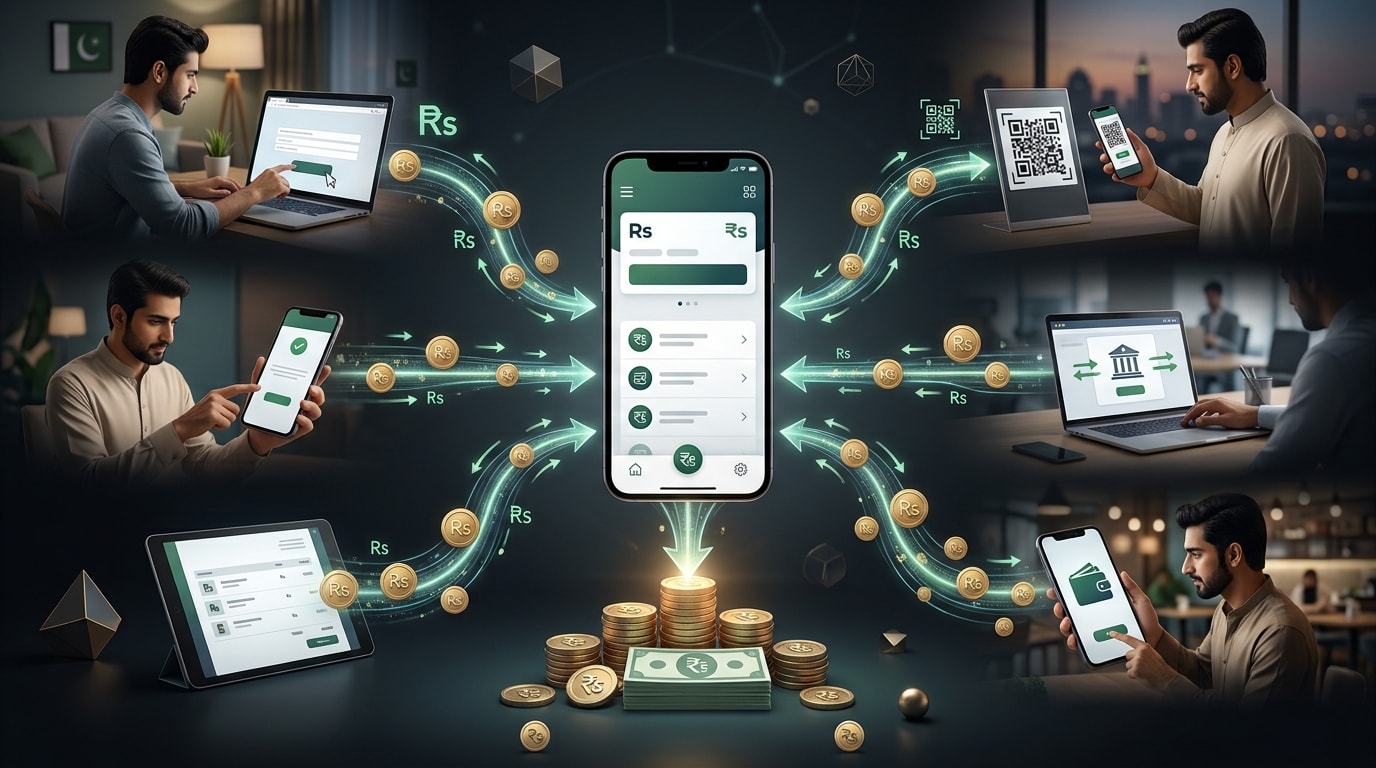
Businesses can collect payments online through payment links, payment gateways, bank transfers, QR payments, digital wallets, online invoices, payment requests, recurring payments, and other digital payment methods.
But receiving money is only the beginning.
For a business owner, the real question is what happens after the customer pays.
Can you confirm the transaction? Can you see who paid? Can you find the payment later? Can you keep your transaction history organized? Can you reconcile what came in with your business records?
A strong online payment setup should make the entire journey easier, from requesting payment to receiving it, confirming it, tracking it, and managing it.
Why Online Payment Collection Matters for Businesses
Your customer should never have to work harder to pay than they did to decide to buy.
Payment friction can appear in surprisingly small ways. A customer may have to ask how to pay, wait for an invoice, search through messages for bank details, send a screenshot, or contact you to confirm whether a payment arrived.
Every extra step creates another opportunity for the transaction to stall.
Online payment collection gives customers a clearer way to pay while helping businesses reduce manual payment administration.
It can help businesses:
- Accept payments without relying entirely on cash
- Receive payments from different locations
- Send payment requests quickly
- Share payment links
- Accept QR payments
- Receive digital wallet payments
- Track customer payments
- Maintain transaction history
- Confirm completed payments
- Keep payment records organized
- Improve cash flow visibility
- Make reconciliation easier
The benefit is not only customer convenience.
When payments are scattered across cash, messages, bank transfers, screenshots, and separate applications, understanding what came in and what it was for becomes harder.
A more centralized payment process gives every transaction a clearer place in your financial workflow.
Getting paid matters. Knowing exactly what happened to every payment matters even more.
How Can a Business Collect Payments Online?
There is no single payment method that works for every business.
The right choice depends on how you sell, who your customers are, transaction value, customer preferences, and how you manage your finances.
1. Payment Gateways
A payment gateway acts as a digital bridge between the customer, payment network, and business.
When customers reach an online checkout and enter payment information, the gateway helps process and authorize the transaction. Payment gateways are particularly useful for businesses selling products or services through websites and applications.
When evaluating a payment gateway, consider:
- Transaction fees
- Supported payment methods
- Supported currencies
- Integration requirements
- Settlement times
- Security measures
- Customer experience
- Availability in your markets
2. Payment Links
Sometimes you do not need a complete online store. You simply need an easy way to get paid.
A payment link gives customers a direct route to a payment page without requiring a business to build a complete ecommerce checkout experience.
Payment links can be shared through messaging applications, email, social media, or other digital channels.
They can be particularly useful for:
- Small businesses
- Freelancers
- Consultants
- Service providers
- Online sellers
- Home based businesses
- Businesses taking orders through social media
For these businesses, a payment link can act like a digital cash counter. Share the payment option, let the customer pay, and keep the transaction moving.
3. Online Invoicing and Payment Collection
An invoice should do more than tell your customer what they owe.
When payment options are connected with invoicing, customers can move more easily from seeing the amount due to completing the payment.
An online invoice can include:
- Product or service details
- Amount due
- Payment terms
- Business details
- Payment instructions
- Payment options
For freelancers and service businesses, combining online invoicing with convenient payment collection can reduce the back and forth involved in getting paid.
4. Recurring Payments
Subscription businesses, membership services, tutors, consultants, software companies, and businesses working on retainers may need recurring payments.
Recurring payments allow customers to be charged according to an agreed schedule where the relevant provider supports the feature.
This can reduce repetitive administrative work and make recurring revenue more predictable.
Availability depends on the payment provider and market.
5. Bank Transfers
Bank transfers remain important for larger transactions and business payments.
The challenge is often not receiving the transfer. It is identifying who paid, what the payment was for, and whether it has been recorded correctly.
When several customers make similar payments, manually matching every transaction can become time consuming.
That makes payment tracking and transaction records an important part of the collection process.
6. QR Payments
QR payments give customers a fast way to pay digitally using a compatible payment application.
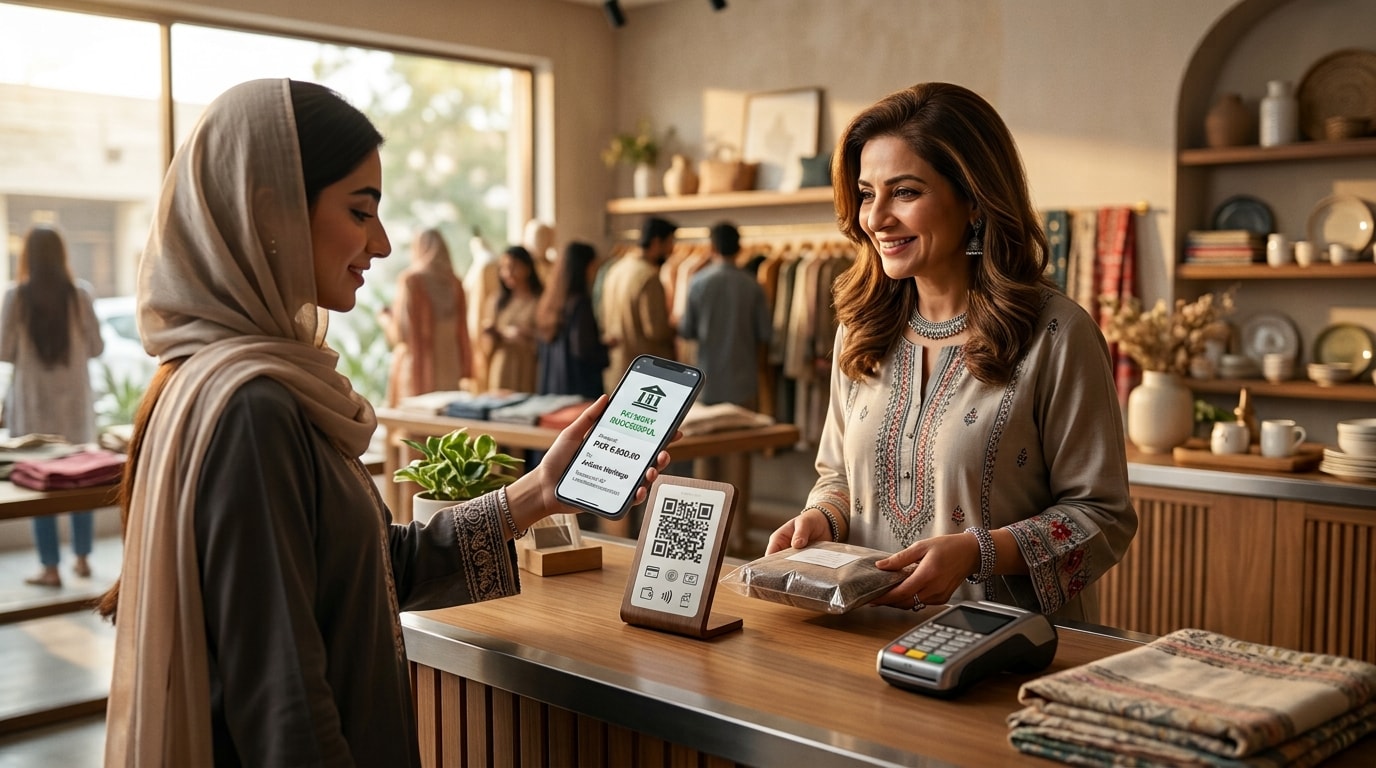
They can be particularly useful for businesses operating at physical locations. A retailer can display a QR code at the counter, allowing customers to scan, pay, and continue with their purchase.
Rupin currently highlights QR payments as a way for businesses to collect money quickly and reduce hassle at the counter.
7. Digital Wallet Payments
Digital wallets give customers another convenient way to pay using their phones.
Businesses should focus on the digital payment methods their customers actually use rather than simply adding more options.
The best payment setup is not the one with the most choices. It is the one that makes payment effortless for customers and manageable for you.
What Makes a Good Online Payment Solution?
Choosing an online payment solution should involve more than comparing transaction fees.
A low cost solution can still create more work if customers struggle to pay or transactions are difficult to track.
Look for a solution that balances convenience, security, relevant payment methods, transaction visibility, and business usability.
1. Transparent Transaction Fees
Understand exactly what you pay for each transaction and whether additional account, settlement, withdrawal, or service charges apply.
Even small differences can affect margins as transaction volume grows.
2. A Smooth Checkout Experience
Your customer has already decided to buy. The payment process should not make them reconsider.
A good checkout should be clear, mobile friendly, easy to understand, and free from unnecessary steps.
Customers should spend their time completing the purchase, not figuring out how to pay.
3. Relevant Payment Methods
Some customers prefer bank transfers. Others may prefer QR payments, digital wallets, cards, or payment links.
Offer payment methods that are relevant to your customers rather than assuming one method works for everyone.
4. Mobile Payment Collection
Customers increasingly discover businesses, communicate with them, place orders, and make payments through their phones.
Mobile payment collection is therefore particularly important for businesses operating through social media, messaging applications, field services, markets, and physical stores.
5. Payment Security
Security is fundamental when money and customer information are involved.
Businesses should evaluate authentication, encryption, identity verification, fraud monitoring, and relevant compliance controls.
For card payments, PCI standards are an important part of the broader payment security environment.
A secure payment experience also helps build customer confidence.
6. Online Payment Collection for Different Businesses
Your payment setup should fit the way you sell.
- Freelancers
Freelancers often manage sales, customer communication, delivery, invoicing, and payment collection themselves.
Payment links and online invoices can reduce unnecessary back and forth.
Instead of:
Invoice sent → payment details requested → payment instructions sent → customer pays → screenshot received → payment manually confirmed
The process can become:
Invoice sent → customer pays → transaction confirmed
Less friction means less administrative work.
2. Small Businesses
Small businesses often need payment solutions that are affordable, simple, and practical.
Useful capabilities can include:
- Online payment collection
- Payment links
- QR payments
- Payment requests
- Transaction tracking
- Payment history
- Digital receipts
- Business financial records
- Payment reconciliation
As transaction volume grows, organized payment management becomes increasingly important.
3. Retail Businesses
Retail businesses need speed.
QR payments can allow customers to pay digitally at the counter without requiring physical cash for every transaction.
The payment should happen quickly while the transaction remains properly recorded.
Your counter should be focused on customers, not payment administration.
4. Service Businesses
Consultants, agencies, tutors, repair professionals, and other service providers may not have a traditional checkout.
Payment links, invoices, and digital payment requests can help move the customer from completed work to payment received without unnecessary communication.
5. International Payments
Businesses serving customers in other countries need to consider:
- Currency conversion
- International transfer fees
- Settlement times
- Supported currencies
- Payment method availability
- Compliance requirements
Not every payment provider supports every country, currency, or transaction type.
How to Collect Payments Online in Pakistan
For businesses in Pakistan, digital payments can reduce reliance on cash and give customers more convenient ways to pay.
Depending on the business model, customers may use bank transfers, QR payments, digital wallets, payment requests, payment links, and other supported digital methods.
But the important question is not simply whether customers can pay digitally.
Can they pay easily, and can you manage what happens after they pay?
A business can successfully receive money and still face administrative problems if payment information is scattered across messages, screenshots, bank statements, and separate records.
A better payment workflow should connect collection with visibility.
Consider:
- How customers will pay
- How payments will be confirmed
- How transactions will be recorded
- How payment history will be maintained
- How incoming money will be tracked
- How transactions will be reconciled
- How payment activity contributes to cash flow visibility
How to Track Online Customer Payments
Getting paid is only half the job.
You also need to know where that money came from.
Payment tracking can help you understand:
- Which customers have paid
- Which payments are pending
- How much has been received
- When payments were made
- Which transactions are outstanding
- Your transaction history
- How much money is coming into the business
Without proper tracking, online collections can create another administrative problem.
Imagine receiving fifty payments in a week but recording them across messages, screenshots, bank records, and separate applications.
The money may be safe.
The information around that money becomes the problem.
A centralized transaction history gives your business a clearer way to understand payment activity and makes reconciliation and financial management easier.
Payment Confirmation, Receipts and Cash Flow
Customers want confirmation that their payment went through.
Businesses need the same certainty.
A well organized payment process creates a simple chain:
Customer pays → transaction is recorded → payment is confirmed → business continues with fulfillment.
Digital receipts can also give customers a useful reference for their purchase.
Better payment collection can also improve cash flow visibility.
A business can have strong sales and still experience financial pressure if customers take too long to pay or incoming money is difficult to track.
Payment tracking can provide better visibility into:
- Incoming cash
- Outstanding payments
- Transaction activity
- Customer payment patterns
- Available business funds
This visibility can support decisions around inventory, expenses, suppliers, and day-to-day operations.
Payment collection is not an isolated feature. It is part of your wider financial workflow.
How Businesses Can Reduce Failed Payments
Payment failures can happen because a payment method is declined, a customer has insufficient funds, account information is incorrect, or a transaction is flagged for security reasons.
Recurring payment businesses can face additional challenges when scheduled payments fail.
Businesses should consider solutions that provide appropriate payment notifications, clear payment status information, and practical ways for customers to resolve failed payments.
A failed payment should be treated as a payment problem to solve, not automatically as a lost sale.
Managing Chargebacks and Payment Disputes
A chargeback occurs when a customer disputes a transaction through their bank or payment provider.
Chargebacks can create financial losses and administrative work.
Businesses should maintain clear:
- Transaction records
- Invoices
- Receipts
- Relevant customer communication
These records can help support legitimate transactions when a dispute needs to be reviewed.
The protection and dispute support available depends on the payment method and provider.
Customer Payment Portals
Businesses with repeat customers may benefit from a customer payment portal.
Depending on the solution, customers may be able to access:
- Outstanding balances
- Previous invoices
- Payment history
- Payment options
- Account information
The advantage is self-service.
Customers can potentially check invoices and manage payments without contacting the business for every small request.
That means fewer repetitive payment conversations for your team and more control for your customers.
Common Mistakes When Collecting Payments Online
Even businesses that offer digital payments can create unnecessary friction.
1. Making Customers Ask How to Pay
A clear payment request, invoice, payment link, or QR code should make the next step obvious.
2. Relying Entirely on Screenshots
Screenshots may indicate that a customer attempted or claims to have made a payment. They should not replace proper transaction confirmation and records wherever those are available.
3. Offering Irrelevant Payment Methods
More options are not automatically better. Focus on the payment methods your customers actually use.
4. Failing to Track Payments
Receiving money without maintaining records can make reconciliation and financial management difficult.
Managing Everything Across Separate Tools
Using separate applications for payment requests, transaction records, bookkeeping, and reporting can create unnecessary complexity.
The fewer places you have to check, the easier it is to understand your business money.
What Should a Business Look for in a Payment Collection Solution?
Before choosing a solution, look at the complete payment journey.
1. Ease of Collection
Can customers understand how to pay without assistance?
2. Relevant Payment Methods
Does it support the payment methods your customers actually prefer?
3. Transaction Visibility
Can you easily see incoming and completed transactions?
4. Payment History
Can you review previous payments when you need them?
5. Security
Does the provider have appropriate identity verification, authentication, encryption, fraud monitoring, and compliance controls?
6. Business Financial Management
Can payment activity connect with financial records and reconciliation?
7. Scalability
Can the solution continue to work as transaction volume increases?
The best payment collection solution is not necessarily the one with the longest feature list.
It is the one that removes the most friction from your business.
How Rupin Helps Businesses Collect and Manage Payments
For businesses in Pakistan, Rupin approaches payment collection as part of a broader business finance system rather than treating it as an isolated transaction.
Rupin provides business account and wallet functionality alongside payments and collections, bookkeeping and reconciliation, and visibility into payments, expenses, and transactions.
Rupin also highlights QR payments as a way for businesses to collect money quickly at the counter and reduce friction during customer transactions.
The broader advantage is what happens after the payment arrives.
You need to know what came in, where it belongs, and how it fits into your financial records.
By connecting payment collection with transaction visibility, bookkeeping, and reconciliation, Rupin can fit into a more organized financial workflow for your business.
Rupin states that its security approach includes:
- NADRA biometric identity verification
- End to end encryption
- Multifactor authentication
- AI driven fraud monitoring
- KYC and AML compliance
For a business owner, the goal is simple.
Customers should have a convenient way to pay while you have better visibility over your transactions and finances.
That is where Rupin fits into the payment collection journey.
Start Collecting Payments More Simply With Rupin
Online payment collection should make running your business easier, not become another responsibility you have to chase.
Payment links, QR payments, bank transfers, digital wallets, payment requests, and online invoices can all play a role in helping businesses collect money online in Pakistan.
But the real value comes from connecting payment collection with what happens afterward.
Transaction tracking. Reconciliation. Bookkeeping. Financial visibility.
Rupin brings business accounts and wallets together with payments and collections, bookkeeping and reconciliation, and visibility into business payments, expenses, and transactions.
Instead of treating every customer payment as a separate task, businesses can build a more connected approach to managing their money.
Your business should be busy serving customers and growing revenue. Your payment process should simply keep up.
Download the Rupin app and explore a more organized way to send, receive, track, and manage business money.
FAQs
1. What does it mean to collect payments online?
Collecting payments online means receiving money from customers through digital payment channels rather than requiring an in-person cash payment. Depending on the solution, this can include payment links, payment gateways, bank transfers, QR payments, digital wallets, online invoices, and payment requests.
2. What is the best way to accept online payments for a small business?
The best method depends on your business model and customers. Freelancers and service providers may benefit from payment links and online invoices, while physical retailers may find QR payments useful. Consider convenience, relevant payment methods, security, transaction tracking, payment history, and manageable costs before choosing a solution.
3. How can a business collect payments online from customers?
Businesses can collect payments through payment links, payment gateways, QR payments, bank transfers, digital wallets, payment requests, online invoices, and recurring payment systems where available. The right combination depends on how the business operates and what customers prefer.
4. How do payment links work?
A payment link gives a customer a direct route to a digital payment page. Businesses can share the link through appropriate channels such as messaging applications, email, or social media, and customers can complete payment using the methods supported by the provider.
5. Can businesses collect payments through QR codes?
Yes. Customers can scan a business QR code using a compatible payment application and complete the transaction digitally. QR payments can be particularly useful for retailers and other businesses collecting payments at physical locations.
6. How can businesses receive payments online in Pakistan?
Businesses in Pakistan can use bank transfers, QR payments, digital wallets, payment requests, payment links, and other supported digital payment solutions. The right option depends on the business model and customer preferences.
7. How can a business track customer payments?
A business can use a payment management system that maintains transaction records and payment history. Tracking helps identify completed payments, outstanding amounts, transaction dates, and incoming cash.
8. Why is payment tracking important?
Payment tracking helps businesses understand which customer paid, what the payment was for, when it was received, and how it fits into the wider financial picture. It can also make reconciliation and financial management easier.
9. Are online payments secure?
Online payments can be secure when businesses use reputable providers with appropriate security controls. Businesses should evaluate authentication, encryption, identity verification, fraud monitoring, and relevant compliance requirements.
10. What are recurring payments?
Recurring payments allow businesses to collect scheduled payments repeatedly where the relevant payment provider supports the feature. They can be useful for subscriptions, memberships, retainers, tutoring, software services, and other recurring business models.
11. How can businesses reduce failed payments?
Businesses can reduce payment friction by providing clear payment instructions, monitoring payment status, keeping customer information current where applicable, and using solutions that provide appropriate notifications and payment recovery features.
12. What is a chargeback?
A chargeback occurs when a customer disputes a transaction through their bank or payment provider. Businesses should maintain appropriate transaction records, invoices, receipts, and relevant customer information to support legitimate transactions and respond to disputes.
13. Can businesses accept international payments online?
Some providers support international and multi currency payments, but availability depends on the provider, countries involved, currencies, transaction type, and applicable requirements. Businesses should review supported markets, currencies, exchange rates, fees, settlement times, and payment methods before choosing a solution.
14. What is an online payment collection system?
An online payment collection system enables businesses to request and receive customer payments digitally. Depending on the solution, it may also provide payment confirmation, transaction records, payment tracking, invoicing, reconciliation, and other financial management capabilities.
15. How does Rupin help businesses collect payments?
Rupin provides business account and wallet functionality alongside payments and collections, QR payments, bookkeeping and reconciliation, and visibility into payments, expenses, and transactions. Rupin positions itself as a broader business finance platform rather than simply a payment collection tool.
16. Can Rupin help businesses manage transactions after receiving payments?
Yes. Rupin includes bookkeeping and reconciliation capabilities and provides visibility into payments, expenses, and transactions. This allows payment collection to fit into a broader business financial management workflow
17. Is Rupin secure for business payments?
Rupin states that its platform uses NADRA biometric identity verification, end to end encryption, multifactor authentication, AI driven fraud monitoring, and KYC and AML compliance. Rupin also states that the product operates under SBP pilot authorization, with final licensing pending.
18. How can a business get started with Rupin?
Rupin currently describes a digital onboarding process involving a mobile number, OTP verification, CNIC verification, and biometric verification. Once ready, businesses can add money and use the account to send, receive, or track money.
19. Why should a business use Rupin for payment collection?
Rupin connects payments and collections with business account functionality, transaction visibility, bookkeeping, and reconciliation. This broader approach can help businesses avoid treating payment collection as a completely separate activity from their everyday financial management.
20. How can a business start collecting payments online with Rupin?
Businesses can explore Rupin's business account and payment collection capabilities through the Rupin app. Rupin is designed to bring business money and operations into one place, including payments, collections, transactions, and financial records.